On a pilgrimage, during Covid-19

On a pilgrimage, during Covid-19
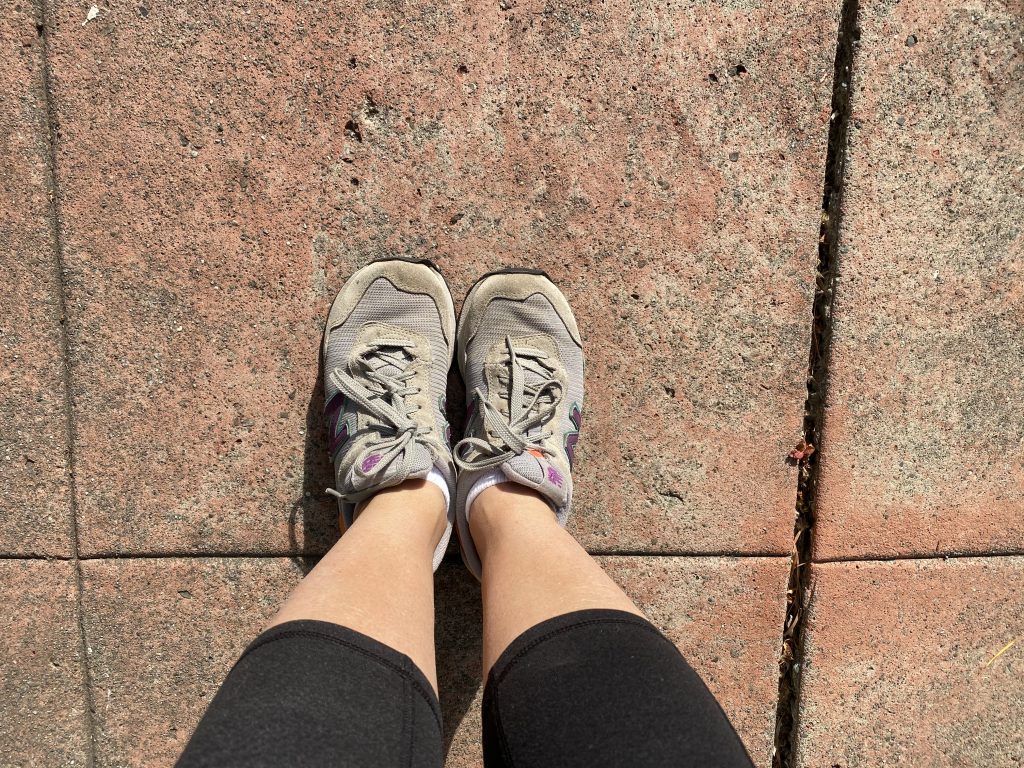

I don’t really have a bucket list. If I did though, one of the items at the top would be walking the Camino de Santiago, the ancient pilgrimage route that runs through Northern Spain. I have always dreamed of taking a month off to walk the route and perhaps discover what draws people from around the world to make the journey every year. I’m getting my chance now to do the Camino, only this one is virtual. It’s not the same as going to Spain by any stretch of the imagination, but during this Covid time it’s the closest I can get.

What’s a virtual Camino? During the month of July, I’m walking one day a week on paths close to home and listening to an accompanying audio program full of beautiful poems, music, insights, and scripture readings. I’m one of several hundred “pilgrims” doing this Camino virtually through InterVarsity Christian Fellowship. (I participated in IVCF when I was a college student and have supported their work ever since.) It’s only an hour a week, hardly anything compared to the full days of walking people do on the actual Camino, but it’s a deep hour.

So far the Camino has been a wonderful antidote to the anxious times we live in. Before starting week one, we were invited to journal our hopes for the upcoming pilgrimage. I wrote simply “to be with Jesus.” I often feel busy and overstimulated by news, social media, tasks and projects. I know it’s good for my soul to rest and unplug but I don’t do that often enough. The virtual Camino, however, demands that I slow down. I appreciated the first week’s reading of Psalm 23 (“The Lord is my shepherd”) and the chance to try breath prayer as I walked. I enjoyed the Spanish guitar music in between the readings and commentary. The second week’s program included one of my favorite poems by Mary Oliver and an exercise in experiencing the five senses.

Peter and I are doing this Camino together, walking alongside each other, but listening to the audio content through our own phones. I never thought we’d experience the Camino this way. In another lifetime, before we had kids, we drove and camped much of the route of the Camino when we spent half a year in Spain in 1993.

At the time we only knew of the Camino vaguely. We had come to Northern Spain to research family history, eat tapas and make friends. But we began to put two and two together when we saw people with backpacks and walking sticks all heading toward the direction of Santiago de Compostella, on the northwest coast. Then we noticed the albergues (hostels) catering to the pilgrims and the signs with shells on them signifying the Camino route. These pilgrims had walked sometimes hundreds of miles on their journey, seeking spiritual, physical or personal goals as they made their way to Santiago, the city of St. James.

By complete chance, that summer of 1993, Peter and I ended up in Santiago on July 25, the feast day of St. James. Not only was it the feast day, but it was a “jubilee” year, which happens when the feast day falls on a Sunday. St. James is the patron saint of Santiago and his remains are believed to be buried in the cathedral. In 1993, according to the American Pilgrims web site, 100,000 people walked the Camino. Previous years’ totals hovered around 10,000.

Peter and I knew little of this history that day. The day we arrived in Santiago, we parked our little leased Renault outside the city and made our way on foot to the 1,000-year-old cathedral. There were throngs of people speaking in various languages crowding the main plaza. We joined a stream of pilgrims waiting in line on the cobblestone plaza to enter the cathedral. Should we really go in? We felt a little bit like we were cheating since we hadn’t walked the Camino, but we still wanted to see the inside of this magnificent building. Finally we got our chance to enter, following pilgrims in their dusty hiking boots. The space was soaring and smoky. A priest stood in the front of the church pulling on a rope, swinging a massive botafumeiro, a large container burning incense. When we approached the altar, we got ready to hug a gold replica of St. James, just as our guidebook suggested. Later, when we exited, even more people had gathered in the plaza and were spilling out of restaurants serving the local delicacy, pulpo (octopus). Fortunately, we waited around to see what the fuss was about and were treated to a grand fireworks show. The night sky lit up with color against the backdrop of the ancient cathedral and oohs and aahs from the crowd.

Walking the streets and hills of Berkeley won’t be as exhilarating as that accidental Camino we experienced in Spain. Given our shelter-in-place though, our virtual Camino is exciting enough for me now. And there will be “extras” that give us a little taste of the Camino life. This past week we had a chance to Zoom with several participants, much like pilgrims on the real Camino get to swap stories in the albergues at the end of the day. Next week there will be a virtual wine tasting and Spanish cooking night and another week we are invited to watch “The Way,” the 2010 movie about the Camino starring Martin Sheen. Since I love anything Spain, I’m happy.

There’s still time to join this Camino. If you’re interested, you can visit: https://gfm.intervarsity.org/events/faculty-digital-camino The organizers are open to newcomers at any time. All it takes is a phone and the patience to download the audioguide—and do the one-hour walks. The Zoom meetings are optional.

Here’s Mary Oliver’s Summer Day. As Peter says, the last two lines are one of the best expressions of how to live life as any you could find.

The Summer Day

Who made the world?
Who made the swan, and the black bear?
Who made the grasshopper?
This grasshopper, I mean-
the one who has flung herself out of the grass,
the one who is eating sugar out of my hand,
who is moving her jaws back and forth instead of up and down-
who is gazing around with her enormous and complicated eyes.
Now she lifts her pale forearms and thoroughly washes her face.
Now she snaps her wings open, and floats away.
I don't know exactly what a prayer is.
I do know how to pay attention, how to fall down
into the grass, how to kneel down in the grass,
how to be idle and blessed, how to stroll through the fields,
which is what I have been doing all day.
Tell me, what else should I have done?
Doesn't everything die at last, and too soon?
Tell me, what is it you plan to do
with your one wild and precious life?

—Mary Oliver
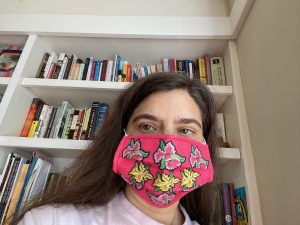


Do I really have to leave lockdown? Confessions of an introvert

Do I really have to leave lockdown? Confessions of an introvert


There’s a scene in Stir Crazy, the 1980 comedy about two men running from the law, when Gene Wilder’s introspective character is about to be let out of solitary confinement.

“One more day, one more day,” he says to the guard in front of him. “I was just beginning to get into myself.”

Although I’d never in a million years want to be in solitary confinement, there’s a tiny bit of that scene that rings true to me now that lockdown is easing. For an introvert like me, who likes to think and read a lot, the idea of resuming a busier life with appointments, face-to-face meetings and social outings isn’t all that appealing.

For me, lockdown has given me permission to spend even more time reading, listening to podcasts, tuning into book talks and journaling. I’m one of the lucky ones who has been healthy, financially stable and lives with loving family members. My husband, son and occasional Facetime calls with friends have provided just enough social contact for me to make it through this time.

Other introverts can probably relate. We live in an amazing time when there are more lectures, podcasts, movies, audiobooks and real books (still available via Amazon or independent bookstores that ship) than ever.

I’m particularly drawn to podcasts. When I discover a new one, I’m like a kid in a candy store. I download it and save for just the right moment when I can savor it fully. Meanwhile I can fill a whole evening with a good book, the longer the better. I’d rather spend all night reading Victor Hugo than expending my energy in a social situation. (OK, maybe that’s a slight exaggeration, as I do love friends; I could just do without the many superficial interactions daily life involves.)

Lockdown has also been a good time for slower activities like letter writing and e-mail. Recently, when the protests got underway, I read as much as I could about racial injustice and engaged in a long e-mail conversation with family members across the political spectrum. Our e-mail dialogue was better than any of our past in-person conversations, as it allowed us to be more measured and thoughtful and provide links to support our points.

My husband is an extrovert. He loves sports the way I love ideas. For him, lockdown has been more difficult. A few weeks ago, when Tiger Woods played Phil Mickelson in a charity Covid tournament, he was overjoyed. For the first time in months I heard him whooping and cheering from his seat in front of the television. Similarly, when he played golf recently with a friend he said it was the most relaxing time he’s had during lockdown. He could forget the stresses of work and the worries of the world for a few hours.

Being in a mixed marriage of sorts (mixed temperaments!) has always been a challenge. Navigating our post-lockdown reality together hasn’t been easy. Things came to a head for us in late May when my husband’s golf buddy invited him back to his place for pizza–with three other people. My husband figured that these close friends, whom he hadn’t seen for two months, formed part of his quarantine “bubble.” When I found out about the arrangement via a text, I felt angry and betrayed. How could he take such a risk when we’d been so careful? I hadn’t seen a single friend since SIP began. Eventually, we were able to talk through his “infraction,” and realized perhaps it was time to ease our rules a bit.

SIP isn’t the first time in my life I’ve been socially isolated and relied on books and talks to get me through. The first few months when I cared for my newborn son at home 24/7 I missed the stimulation of adult conversation. Then my hip pastor suggested listening to NPR. It was a godsend. Those hours spent nursing and burping my baby to the soothing sounds of Terri Gross’s voice were happy ones. That was more than 20 years ago. I could never have imagined then how the whole world of online talk would open up. Iphones in particular have made it easy to listen to content, from “This American Life” to long books that used to fill multiple CDs.

Sometimes I wonder if I’ve come to depend on podcasts and other inputs too much. I take great comfort in the fact that so much content is available, the same way an alcoholic might feel safe when the liquor cabinet is full. If worse comes to worst, my reasoning goes, I can listen to that set of 36 lectures on philosophy, from Descartes to Derrida, that I downloaded a few years ago. But then again, I think wistfully, maybe post-lockdown life will mean resuming all the face-to-face interactions and I’ll never get to those lectures.

For now, we are all on the precipice of a new way of life. Even for me, a confirmed introvert, I know that living like a hermit isn’t totally healthy. Ideas are great, Facetime is good, and e-mail is OK, but they are no substitute for face-to-face contact. There’s a give and take when you arrange social dates, when you help a friend physically with a task or when a friend helps you. I need this to grow and change as much as I need all the ideas I’ve ever learned online. I hope I can unplug a little—one podcast and book at a time.


What a miracle looks like

What a miracle looks like


Every morning after I wake up these days, I sip my coffee and hunch over my phone for far too long. What has happened overnight in our Covid-19 world? I’m afraid to know but I want to stay informed.

It’s bleak. I read stories of relatives who can’t be present with their dying family members. I read about healthcare workers who still don’t have enough protective equipment. I read about people losing their jobs. It’s enough to shake my faith. To make me question.

Yet I continue to believe. Among the stories of suffering I hear about amazing people who are on the front lines serving as doctors and nurses. I watch teachers adapting to Zoom classes. Yes, God seems to permit suffering but there is so much good in the world too and that is equally unexplainable.

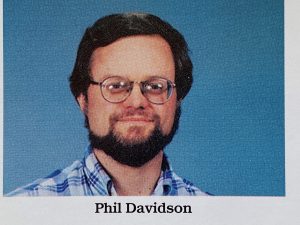
In these times I’ve found myself remembering past crises, both global and personal. Often, I remember my friend Phil. He almost died 15 years ago. In the space of a few days, our community came together to support him in a way I’d never seen before. I share his story now not to say that every story has a happy ending but only to remember that love, prayer and grace are real.

***

It was a typical Monday morning in November. I had just taken the kids to school and I sat down to check my e-mail. The first one I saw said “Pray for Phil.” It wasn’t unusual to receive prayer requests from my church community, but as I read this brief message I was alarmed. Phil, a good friend and pillar of the community, was in intensive care with a severe case of bacterial meningitis.

“He is fighting for his life,” the e-mail read. “Please pray.”

I tried to eat breakfast, but I simply moved the cereal around in the bowl without eating. How could Phil, one of hardiest people I knew—and only in his mid 40s—be struck down so suddenly? Hadn’t I just seen him a week ago in his usual place in the church foyer greeting people coming to church?

Soon, I would learn more details. Phil had battled a nagging cough for the past few months and it had recently turned into a sinus infection. Sunday night he spiked a fever of 106, was unresponsive and his wife called 911. He was now in a medically-induced coma, on a respirator. The doctors gave him a slim chance of survival, and, if he did survive, almost certainly some combination of permanent brain damage, blindness, paralysis and terrible headaches.

Phil was one of the most intelligent people I knew, able to remember arcane pieces of our church history in the middle of a congregational meeting or cite key passages of scripture to encourage someone at any moment. I couldn’t imagine Phil without his sharp mind.

I checked my e-mail again an hour later and saw a new message: “Prayer vigil for Phil.” Jeremy, a young member of the church, was hosting an all-day vigil in the church library. I immediately grabbed my purse and headed for the door. I was glad I could do something to help. I believed that praying with others carried a special power—and what we needed now was a miracle.

I had met Phil fifteen years earlier when I first joined the church. At that time I had just graduated from college and I was exploring what it meant to be an adult and establish my own life. Phil seemed to exemplify what I was looking for. He was ten years older than me and had put down his roots in this church a decade earlier, serving on the board of elders, starting a Bible study group and always ready to help repair the leaky church tower or bring a dish to our annual Swedish smorgasbord.

But Phil wasn’t just a dedicated church member. He had a nerdy side (he was a computer programmer) that often made my husband and I laugh. Robert’s Rules of Order was like a second Bible for him and he always carried a copy to church meetings. Not surprisingly, he was a Trekkie and invited us to join his group that watched reruns on Sunday nights in the Fellowship Hall. I couldn’t imagine the church without Phil.

I admired Phil in many ways. He had the kind of dedication and frugality that I had only seen in my grandparents’ generation. He rarely used a car and instead rode his bike. On Sunday mornings he arrived at church with an elastic band around one pantleg to protect it from the gears. He took off his jacket to reveal a neatly pressed plaid oxford shirt that still looked crisp and sweat-free.

I remembered all of this as I prayed for Phil. In the years since I had met Phil, the church had become my tribe. I had found friendship, shared faith and a place to raise my kids in this community. It was hard to think of losing one of our members, especially one so young. We were a small group—less than 100—so we felt each other’s triumphs and pain acutely.

By mid-day on Monday, the church was fully mobilized in a way I hadn’t seen before. Our pastor, Phil’s wife Karen, my husband, and others were with him in the hospital sending regular e-mail updates. When I prayed that day I sensed I was part of something powerful, one of many voices speaking together.

Our pastor confirmed my experience. “I felt like I was a part of something holy all day,” he wrote that evening about the outpouring of support.

Meanwhile, the doctors were flooding Phil’s body with antibiotics to fight the disease. The previous summer at the same hospital a college student had been admitted with meningitis and had died. Remembering that incident, the medical staff acted quickly, hoping to bring Phil’s fever down and stabilize him.

We had all already witnessed a miracle of sorts in Phil’s life a few years earlier. When I met Phil he was single and seemed content with the situation. He dated occasionally but was afraid of commitment. Most of us assumed Phil would be a bachelor for life.

Then Phil met Karen, a widow about his age, at a Christian singles dance group.

On their first date, Karen asked Phil, “What’s God doing in your life?”

“God’s dealing with my procrastination,” Phil replied.

Karen was impressed with Phil’s honesty. They were married at a big church wedding a year later when Phil was 44.

Phil points out today that if he had still been single at the time he contracted meningitis and lost consciousness at home, he wouldn’t have made it to the hospital in time—or maybe at all.

Fortunately, the antibiotics worked. By the end of the day Monday, we received news that Phil’s fever had come down. He was stable but still unaware of his surroundings. The doctors would try to remove the ventilator Tuesday and assess the damages.

“Tomorrow will be a very hard day,” my husband wrote to the church after visiting Phil. “When the sedation is reduced, that means Phil’s pain will come back and he will have the headache of his life…Please pray for continued healing.”

That night at dinner, we explained the situation to our small boys, ages 8 and 5, and we prayed for Phil.

Tuesday came and the doctors tried to bring Phil out of his coma. He was highly agitated, however, so they decided to wait. At the very least, they determined that Phil hadn’t suffered paralysis or hearing loss, since he responded to his name. But tests on his pupils showed he couldn’t see, a typical symptom caused by the swelling in the brain.

“Pray that God will restore Phil’s vision,” Karen wrote Tuesday night. “I ask that you join me and cry out for God’s merciful healing – that the MRI will reveal no damage.”

Wednesday noon we received the next update.

“Phil is coming to,” our pastor wrote, “and in the words of Karen, he is all there. At one point, she said he had the presence of mind to be grumpy! These are all very good signs, church. In fact, the doctors and hospital staff have not hesitated to put this whole situation (thus far) in the category of miracle.”

Over the next few days Phil gradually recovered all his senses. He stayed in the hospital for three more weeks. His only lasting damage was minor hearing loss in his right ear. It wasn’t long before Phil was back at church, just as involved as ever.

Before this crisis, Phil’s life had been all about building up and supporting the church. He couldn’t have planned it, but his illness unified us in deep and lasting way. Even now, years later, our pastor still reminds us regularly of “Phil’s miracle.”

When telling his story today, Phil remembers the details well. But if you ask him how it changed him, he pauses a bit. Then he says simply: “If I wasn’t grateful before, I am now. The hospital told him me they had never seen anyone fully recover from bacterial meningitis.”

Karen, meanwhile, says that Phil’s illness changed her attitude about prayer and trusting God.

“I confess that before Phil got sick, my attitude about prayer was, ‘God is going to do what God is going to do, so why bother praying,’” Karen says. “The doctors said that Phil was going to die; or if he lived, he would never be the man I knew before his illness—that meningitis would so ravage his brain, that I would wish he had died. It was hopeless, so the only thing I could think to do was to pray—and to ask others to pray with me.”

Prayer brought an incredible amount of peace during Phil’s crisis, Karen says, and since then she and Phil have experienced a deep sense of God’s compassion in their lives. They’ve been able to sit beside others who are suffering, in the hospital or at home, and offer prayer and support.

“Since God so magnificently answered our prayers for Phil’s life, it has been easier to trust Him.” Karen says. “This doesn’t mean that God will ever give us another physical healing as a result of our prayers. It doesn’t mean that He will always answer “yes” when we pray. But it does mean that God hears the prayers of his people and that we can trust in His compassionate answer, and we can praise and glorify His name.”


***

Phil’s story is perhaps just that of one man and one community. It’s different from this massive crisis we are in now. Or is it? We are all just individuals facing various challenges in our altered world, some minor and some severe. Despite the overwhelming nature of any particular situation, we have power in our actions and prayers. For Phil, it took a team of doctors and praying churchgoers to rally around him. It makes me wonder how God might be calling me to live and trust Him in these uncertain times. Even now, in our shelter-in-place worlds, there is much we can do.

Thanks to Phil for recounting his story to me and reminding me of God’s love and power.


The April 15th that never happened

The April 15th that never happened


It’s April 15th. Normally this is a day for celebration in our household. Peter has finished the long race to the end of tax season. He and his staff go out for margaritas to celebrate. At home we finally have time to discuss fun things like upcoming vacation plans and the start of baseball season.

This year, of course, everything is different. Taxes are not due for another three months. There are no vacations or baseball on the horizon. This day–normally a focal point of our whole year–will come and go without fanfare. It’s just one more step in living out our new reality; somehow this morning writing a blog marking this milestone seems right.

As I write this all four members of my family are home and have no plans to go out–a first for an April 15th. The boys are sleeping in, Peter’s working from home, I’m at my desk. There are silver linings in this crisis for sure. We’ve had more time together, a more relaxed schedule, and meaningful calls and texts with far-flung family and friends. Miguel, who normally lives in New York, is home with us now for a precious week. We are lucky for sure. Unlike those on the front lines or without resources, we can afford to stay home for the most part, eat good food and stay healthy.

In some ways, we’ve actually reached a bit of an equilibrium, if that’s possible. We’ve learned to go out wearing masks, disinfect our groceries and use Zoom expertly. We’ve learned new recipes, dusted off our bikes and pulled out old board games from Peter’s childhood.

I have to remind myself, though, that even just a month ago things we’re only beginning to change and the stress was palpable. A month is a short time and so much has happened. So many in the world have suffered and are still suffering. I’ve at times felt helpless, small, anxious and angry. No wonder so many times this past month it’s been hard to process all the change. No wonder I have found it difficult to write, pray or attend virtual church.

My personal journey into this new world started almost exactly a month ago. On Saturday, March 14, I had planned to lead a retreat for Lent at our church. Ironically, it was a day intended to help folks slow down and listen to God. I was looking forward to helping the participants enter into Lent and examine their lives more closely. However, a couple of days before the retreat, as news about the virus confirmed its severity and contagious nature, I decided to cancel it. I wasn’t sure if I had made the right decision. I was disappointed. Maybe I had acted too soon? Maybe I had let my nerves about leading a retreat (unrelated to the virus), get the better of me. But then, a few days later, the Bay Area and then California ordered a lockdown—and I knew I had done the right thing.

A few days before the planned retreat, Wednesday, March 11, another stress was percolating. That day Miguel and his girlfriend Mickey flew from New York to Barcelona. They had been planning the trip for some time and wavered about going but in the end thought it might be OK. They thought it would even be better than staying in New York. Unfortunately, it wasn’t OK. (While Barcelona wasn’t yet in a crisis, the rest of Spain was getting hit hard.) As they were in the air, Trump announced there would be no more flights from Europe to the US. As soon as they landed in Barcelona they began a mad scramble to get tickets to come home. They spent the next three days calling airlines. Finally that Sunday, thanks to Mickey’s mom, they got a flight through London to LA. After a long 20-hour layover at Heathrow, they arrived in LA, where they self-quarantined at Mickey’s parents’ home for several weeks. Sadly, while there, they also got the news that their college graduation ceremony in May would be postponed indefinitely.

While all these events unfolded, Peter, as a small business owner, had to make tough decisions about whether to keep his office open, how to make it safe for employees to pick up and exchange files, and educate himself about the various new laws that might affect his clients. He was resolute in his desire to pay all his employees fully and to accommodate clients who might be suffering from economic hits. For a guy who is the epitome of conscientious, I could almost physically feel the burden he was carrying. He felt a small bit of relief when on March 20 the IRS finally announced they were delaying the filing deadline. The office would plow on, at a slower but steady pace.

It was TJ, my youngest, who experienced change before anyone else. He was home for spring break the second week of March when his school, USF, announced that classes would go virtual the rest of the year and students had to move out of the dorms. The day we went to get his things in San Francisco was a sad day. As I packed up his Polaroid photos of friends, so lovingly displayed above his bed, and his mugs for tea and his snacks, I felt bad his dorm experience had come to an end so abruptly. At the same time, as I helped him take down his decorative lights and fold his clothes, I felt grateful. His first time living on his own had been positive, a major answer to prayer for any parent. I knew he’d get the chance to do it again eventually.

I’ll never forget looking at TJ’s stripped down dorm room one last time. It was empty but the view out his window, with downtown San Francisco in the distance, sparkled. The fading afternoon light illuminated the gold dome of city hall, the Salesforce Tower, the pyramid building and a slice of the Bay beyond that. I took one last photo. When we got in the car, TJ plugged his phone into the speaker and queued up John Steinbeck’s East of Eden, a book we’ve both grown to love. Somehow that tale of a man trying to find himself and his place in a changing world seemed fitting.

Like Adam Trask, we are all trying to find ourselves in this new world. Just like Adam tried to fit into a pioneering turn-of-the-century California, we are trying to fit into this new landscape. It’s not easy. It takes time. Sad things will happen. Good things too.

Last Saturday I had my first Zoom spiritual direction appointment. I have tried giving spiritual direction a few times before online, but it never felt quite right. So I had resisted meeting on Zoom, fearful the experience would be dry and detached. I was surprised this time. I sensed God’s deep care for the life of my directee, both in the mundane details of his life and the truly holy and special ones. I felt restored and more filled with faith and hope after the conversation.

Our pastor told us recently that this week after Easter is called the “bright week” by Eastern Orthodox Christians. During this week we continue to celebrate the resurrection and our belief in a risen savior. The Easter season goes on even though Easter Sunday has passed.

I like the word “bright.” It reminds me of hope. Of light. Of the light shining off those buildings in San Francisco even on a sad day. Of the silver linings even during quarantine. Of the warm eyes of my directee on a computer screen. As I go forward this strange April 15th day into the unknown future, I will try to remember all that is bright and hold it closely.

***

Our April 15th, 2020 bike ride.

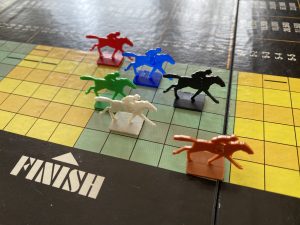
Peter’s favorite childhood game, Win, Place and Show.

TJ with his freshman roommate, Enzo, on move-in day last August.

Adventures in dog obedience training with Romeo and Sara: Part 2

Adventures in dog obedience training with Romeo and Sara: Part 2


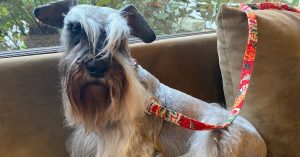
Romeo’s fluffy white beard is matted with clumps of sticky peanut butter and his breath smells of Pupperoni dog treats. As soon as Sara leaves, he runs to his water bowl in the kitchen and drains it. Then he lays down in his spot in the living room for a nap. He’s just finished an hour-long session of dog obedience training.

This dog training is tiring stuff, both for Romeo and for me. We’ve completed a handful of sessions with Sara, a dog behavioral specialist. (If you want to see a super-short video of Romeo learning to relax on command, scroll to the bottom of this post,)

For the most part, Romeo likes the sessions. He gets lots of treats and attention. Sometimes he gets frustrated, forgets his task and barks at me. But he’ll do almost anything to get a treat and, with a little guidance, he gets back on track. Sara thinks he’d work all day and make himself sick with treats if we let him.

Today was a banner day because he performed so well on his current “trick” (laying on his mat) that he no longer needs the clicker. (If you don’t know what a clicker is, it’s pretty simple. It’s a little device that makes a click. You can hear the click in the video at the end.) Now when Romeo returns to his mat, I don’t need to click to reinforce the behavior. I simply say “yes!” and give him a treat.

Today we also worked on a “chain of commands.” Instead of just doing one behavior and getting a treat, he had to perform several—lie on his mat, touch his nose to my hand and lie down on the carpet. Sara instructed me to vary the order of behaviors so he has to use his brain and pay attention to my commands.

I’ve learned that patience is the most important requirement in dog training. Sometimes Romeo is so eager for the treats that he simply stares at my treat hand and barks. I wait, and wait, and wait some more. I try not to make eye contact as that makes him bark more. I’m about to give up and call it quits. I wait a whole minute or two it seems. Then, suddenly, Romeo remembers my command. Or maybe he just gives in and performs, knowing what I want all along.

If Romeo is pushing back a little, I am too. I’ve been hesitant to act on some of Sara’s suggestions. She wanted me to get a white noise machine to help screen out the street sounds that make Romeo get agitated as he perches on the couch all day. She also wanted me to apply opaque transparency film to the living room window so he couldn’t see the people and dogs walking by, which really get him going. I finally got the white noise machine (which only helps a little). I haven’t yet applied the film.

The point of all this is to have a bit mellower dog who is more relaxed in general, but especially when people come over. As it is now, all it takes is for someone to open a car door outside and he goes bananas. When they ring the doorbell, his bark reaches a new level of ear-splitting pitches. I don’t mind his efforts at guarding the house, but I’d like to help him relax when we both know it’s just a friend. Thus, the hope is that one day he’ll learn to tone down his reaction and even sit nicely on a mat while our guests enter the house.

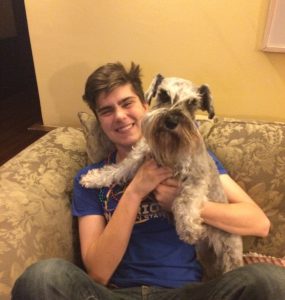
We got Romeo seven years ago from a Mexican family in Modesto. One Saturday morning my boys, my mom and I packed into our Prius and drove to the Central Valley. We met the family in a Walmart parking lot to see their litter of puppies. As we viewed the dogs, a Walmart security guard approached us and told us to leave—no sales allowed in the parking lot. So we headed across the street to their apartment and spent several minutes playing on the floor with the six or seven salt and pepper-colored puppies. Romeo stood out because he had the darkest hair and eagerly jumped into our laps. We had met the new love of our life. He was so tiny that the Dairy Queen cones we bought on the way home were bigger than him (maybe a slight exaggeration).

For the next couple of nights 12-year-old TJ slept next to Romeo on some blankets in the living room. Romeo couldn’t go down the stairs yet and he made no noise at all. I thought, “Wow, I’ve gotten lucky and found a Schnauzer who doesn’t bark.” That theory died quickly. After a few weeks Romeo found his voice—and his perch in the front window. He hasn’t stopped barking since then.

Despite his vocal chords, Romeo’s been a sweet and loyal dog. He loves to play with his rope (average lifespan of a rope=3 months), race in the backyard and cuddle. If I’m gone overnight he often sits out all night in the living room waiting for me. And he’s gentle with our cockatiel, watching but never pouncing when it struts around the carpet or flies from room to room. The only thing he’s ever destroyed is a stuffed animal—well, maybe all the stuffed animals we’ve ever owned.

I’m not entirely sure we’ll be successful at this training. Again, it’s mostly dependent on my dedication of practicing each day. I have no doubt Romeo has the brains to handle it. At the very least, he now knows he gets treats when people come to the door. We’re resetting his brain to think positively in stressful situations.

Can a dog really learn to relax on command? In addition to lying down on his mat, Sara’s final task for us this week was to start training Romeo to rest his chin on a pillow when I say “chin.” Later we’ll remove the pillow and he will just rest his chin on the mat. It’s as if I’m training him to meditate on command. If he masters this one, I think we both deserve a reward.

What St. Teresa is teaching me about the new year

What St. Teresa is teaching me about the new year


I’m giving myself an hour or two to write this morning. As with a lot of my writing, I don’t know where this will go. But today seems significant. It’s the last day of the year; tomorrow is a new decade. It seems right to pause, to linger over my coffee and enjoy a bit of solitude before tonight’s festivities.

Something about reflecting on a year past makes me think of the brevity of life. It goes so fast. Life just seems to speed by faster every year. I appreciate more and more how precious each day is, and I want to make it count.

Lately I’ve been reading a biography of the life of St. Teresa. Teresa lived in Spain in the 1500s and is one of the most revered saints of all time. I knew she was famous for her mystical experiences. What I didn’t know was that these visions did not begin happening until later in life. She entered a convent around age 20 and lived there for 20 years or so with an often dry spiritual life, according to her biographer. She was also sick for long periods of time. Then one day after reading the Confessions of St. Augustine (where he recounts his spiritual awakening) she began to have visions.

Teresa faced skepticism and ridicule as a result of her visions. Some in the church doubted her experiences, even saying they were the work of the devil. Nevertheless, Teresa persisted and shortly thereafter established a new order of nuns that was devoted to living a simple, prayerful life. She was convinced the monastic orders had become much too worldly, with comforts and luxuries that didn’t fit with a contemplative life. Again she faced criticism and controversy. In the end, though, she won people over to her side and spent the rest of her life traveling around Spain opening new monastic houses. She is known as one of the key figures of the counter-reformation, reforming the Catholic church from within against the backdrop of the Protestant Reformation.

What I see in St. Teresa is a deep faithfulness. She endured years of dry spiritual life but remained committed to her calling and sought out many spiritual confessors and mentors along the way. She inspires me to remain faithful to my various “callings,” even when they seem to bear little fruit. She motivates me to write, even though writing seems hard and I often lack ideas and words. She motivates me to pursue my spiritual direction work, even though it’s been hard to find people to work with and the way forward is often fuzzy.

It’s easy to get discouraged about our life path, especially when things don’t go our way. So many times we only focus on the immediate moment and forget easily our successes last week or last month. Or we wonder if we will ever attain the goals we seek. I wonder if Teresa felt that way as she approached middle age, not much younger than me.

As a writer I often feel only as good as my current output. I suspect others feel the same way. It can be a challenge to maintain confidence, yet perhaps that struggle to create is also a key part of moving forward. As Wendell Barry writes: “The mind that is not baffled is not employed. The impeded stream is the one that sings.”

Going into 2020, I want to put away discouragement and myopic views of success. Instead, I want to embrace mystery. Sure, I will set some goals and make some resolutions. Some I may even attain. But I also realize life is full of mystery and divine encounters and experiences, not just for saints but for everyone. There are just so many things I can’t anticipate or even will to happen. I look forward to the books I’ll read, movies I’ll see, conversations I’ll have, words I’ll write, prayers I’ll say, and places I’ll travel, both real and imaginary.

I have to laugh when I think back to last year at this time and remember that instead of St. Teresa, I was reading about a modern day “saint” of sorts, Marie Kondo, the queen of tidying up. I got caught up in her message of tidying and I managed to apply her philosophy to my overstuffed bookshelves, getting rid of books that no longer brought me joy and organizing the ones that did. It was one of the most enjoyable things I did all year. You can read my post about that here. I hadn’t planned on that, it just sort of happened–sort of like stumbling across the biography of St. Teresa, which I found in the used section of my neighborhood bookstore.

What is clear about this year is that I won’t be the same person in 2021 as I am today. None of us will. That may be scary but it’s also exciting.

Prayer for 2020:

God, may you take this heart and mind
that sometimes feel empty,
that lack words, lack spirit, lack direction,
and fill me with
your wonder, your words, your creativity
Equip me to travel to places both far away and near,
To encounter fellow travelers,
But also to be at home with the page and person in front of me.


Zen and the art of making movies (with Miguel)

Zen and the art of making movies (with Miguel)


Earlier this month I flew to New York to watch my son Miguel film his final thesis project, a short movie he wrote, directed and starred in. It was fascinating observing a movie set up close and watching a group of about 20 people–cast and crew–throw themselves into the project for a marathon four days. I felt I had stepped into another world, the world of a New York film student, but also the world of a tender story about two brothers wrestling with their faith.

The most surprising part of the film experience for me was the amount of collaboration and teamwork. You hear about movie sets driven by big egos and lots of drama. But I sensed little of that on this set. Perhaps it was a testament to Miguel’s calm demeanor and the relationships people had with one another. Every participant, from the assistant director to boom operator, knew their place and assumed their role enthusiastically. Most of these “kids” probably had little real film experience when they started film school three years ago. But somehow, as they’ve volunteered on each other’s sets, they understand how to work together.

“Let’s not give Miguel a haircut,” called out one of the directors, asking for the camera operator to pull back a bit so the top of Miguel’s head wouldn’t be cut off in a particular scene.

“That was just beautiful,” said another director after they had filmed a scene for the fifth time trying to get everything—the lighting, sound and timing of lines—just right.

The film takes up the story of two brothers, one straight and one gay, and their relationship. Miguel played the straight brother and his good friend Christian played the gay brother. Initial scenes establish the close friendship between the brothers as they eat dinner together at Miguel’s apartment, play basketball and relax at a party. The tension arises when Miguel’s character invites Christian’s character to church and Christian hesitates before accepting his offer.

“Are you guys pretty chill, or more strict about stuff?” says Christian’s character.

“I mean, I think it depends,” says Miguel’s character.

“I feel like you’re either strict or not, right…so you guys don’t like, hate gay people?” says Christian’s character.

“What? Hahahaha, no! This is New York,” says Miguel’s character.

As a gay man, church is problematic for Christian’s character and during the final scene we see what happens when he goes to church. (You’ll have to watch the movie to find out the ending! Miguel hopes to have a final cut done next spring.)

So much of making a movie involves find the right locations. For the initial scene of the movie Miguel used my friend Tamara’s aunt’s apartment on the Upper West side. The crew transformed her elegant apartment into what could pass for a hip, 20-something space by bringing in original paintings, rearranging furniture and adding special lighting. Victoria (owner of the apartment) was a bit stressed as her apartment filled up with camera equipment, charging batteries and people. We set up a table in the hallway outside the apartment for snacks and coffee. My job that day simply involved getting snacks in the morning and cookies from Levain Bakery in the evening. All ended well as the crew did a nice job of reassembling everything by 11 pm that night. Phew.

One scene was shot outside on a basketball court and I learned how difficult outside scenes can be. The shooting was interrupted by honking horns, people walking through the court and changing light patterns from clouds passing overhead. When you watch a movie you don’t think about all the work and time that goes into capturing the perfect shot.

For the final scene of the movie, the crew rented the basement of an old Brooklyn church, which they turned into a funky young person’s church space. They designed a poster and fliers for their “church” (called Thrive) and set up folding chairs and an overhead projector to display songs. I got to be an extra in the scene (along with Tamara and many other friends).

It took about four hours to film my “extra” scene, which involved Miguel leading the congregation in the song “Come Thou Font” about a dozen times. I guess all his guitar lessons as a kid paid off (thanks Felipe)! In between takes I got to chat with the other extras, who were all young creative types trying to make it in the big city: Donovan, a composer originally from North Carolina, Jesus, a photographer originally from Mexico, and Evangeline, an actress from Utah, among others. Luis, another friend of Miguel’s, was there too, as was his Dad, who was visiting from London, and we talked about Brexit, Trump and where we were when the Berlin Wall fell. Most of us stayed at the church until midnight that night watching the very last part of the movie where Miguel’s character and the “pastor” have a heart-to-heart talk. The action seemed so real I almost forgot it was a movie.

People ask if this movie is based on Miguel’s own experience—and it certainly is. I know he’s thought long and hard about the church’s attitude toward LGBT folks. It is one of the key issues for his generation. It’s something I think about a lot too. We’ve had many good discussions about it and are living a sort of a parallel process of discovery/advocacy about the topic.

Miguel ends his movie not by answering any questions, but by raising questions. Most people who read the script want the story to continue. I hope he expands on it and turns it into a feature. But even if he doesn’t, this is a beautiful piece and it was a beautiful process getting there. I would venture to say the process was even a bit of like meditation, a zen-like devotion to attention and detail. Living in the moment. Capturing moments on film. Then later–when the film is made—living the moment again.

I joked with Miguel during the set that I saw signs of this day way back when he was singing karaoke songs at family get-togethers. He’s always had a bit of flair for performance and a skill at bringing people together. We never know where life will take us or our kids and what interests will stick. His dream now is to direct movies. I think he’s off to a great start. And if any of his dedicated friends is reading this–Isabelle, Regina, Grace, Delaney and so many more–thanks for giving your time and talent.

Training the third child

Training the third child


This was our second week of dog obedience training. I say “our” because it’s training both for Romeo and me. It’s still early in this process, but I am hopeful that I can teach Romeo—not exactly an old dog at age 7, but not a young one either—new tricks.

I made an appointment with Sara, our dog trainer, a few weeks ago after reading a glowing review on NextDoor. Sara seemed to have the right pedigree–professional training, experience, and a humane way of training. Mostly, I wanted Romeo to behave better when people came to the door or out on walks. He’s a loving and playful dog but gets nervous and barky around strangers.

Now that my kids are gone, I figure this is a good time to get around to paying more attention to the dog. Romeo really is like our third child. He’s been a great companion and these days he and I often commiserate on the couch about how quiet our house has become without the kids. No one walks through the door at three o’clock eager to play with him anymore. I just don’t have the same touch playing tug-of-war as the boys do.

On Sara’s first visit, she observed Romeo, asked me a lot of questions and determined he was quite nervous. He sits on the couch all day long and barks at people passing by the front window. Even when he’s not at the window, he hears noises outside and gets agitated. This elevates his stress, she said. When someone rings the bell, he’s already worked up. She recommended a few measures to calm him down, like putting a white noise machine in the living room to screen some of the noise.

Next, Sara taught me to use a clicker, a small device that makes a clicking sound. I was to click the device every time Romeo sat calmly at my feet. Then I would throw him a treat as a reward. I’ve been practicing this for a week and a half and he mostly gets it. The hope is that he’s learning to sit calmly and will eventually do this even when a guest enters and even without the clicker.

Even in two sessions, Sara has taught me a lot about dog behavior. She points out how Romeo sometimes shakes himself out during our training sessions or on the short walk we took today. This is a calming behavior, she says. She points out the difference between his barks for attention (for play or treats) and his barks of nervousness (like when she came over the first time). When I told her how Romeo often licks his feet at night, she diagnosed that this was also likely a way to soothe himself. She recommended some new dog toys that would also provide this soothing.

I asked Sara why Romeo is so nervous around new people when no one has ever treated him badly. He’s also nervous when anyone—even I—try to touch his head. She wasn’t sure, but conjectured that it might be a trait he inherited from his parents or could have been caused by stress on his mom during pregnancy. Or it might even be something inherited from a grandparent. Researchers have discovered that epigenetics is a real phenomenon in dogs, she said. I was shocked. I guess dogs really are a lot like humans.

The next two weeks we have several guests coming to stay with us. Sara says the guests should ignore Romeo. Any attention they might give may reinforce some of the behaviors we’re trying to change. This will be a challenge as people naturally want to interact with a dog and get him to like them. But right now Romeo and I have to focus on our clicker training and calming mechanisms. We have a job to do.

I really don’t mind Romeo barking a little bit. He’s naturally protective and a good watchdog. Hopefully though, he can learn to relax when I tell him things are safe. (He’s especially wary of large men.) We’ve even had to resort to using a shock collar to curb the barking at times. Sad, but true. It works so well we don’t even have to turn it on now. But obviously, this isn’t a good solution. As Sara said, this reinforces his fear and nervousness.

So, here we are, starting anew, teaching old dogs new tricks, one click and one treat at a time. It’s not a bad gig. The world has so many problems and complicated issues. It’s nice to lose myself in the world of me and my dog.

A summertime book drought

A summertime book drought


It’s summer, the ideal time for reading a good book and I’m in a book drought. If you enjoy reading, you know what I mean. You just can’t seem to find a compelling book, no matter how hard you try, and your whole world seems gray.
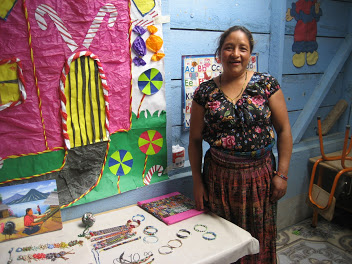
For better or for worse, my mood often depends on the book I’m currently reading—and whether a story is keeping my mind engaged. Yes, I love the entertainment value of a good story but I also enjoy what I learn about myself and the world in the process. When I don’t have that active stimulation going on, I feel bereft, a little less alive.

This month I’ve already had two book fails. Someone recommended reading “There, There,” a book that’s garnering a lot of attention due to its innovative structure, a series of interrelated short stories, and its unique focus on people of Native American ancestry living in Oakland. I love reading books set in familiar places so I thought the Oakland angle would be interesting. (Not long ago I read another contemporary novel, “Lucky Boy,” set in my own neighborhood in Berkeley and found the local references spot on and funny.)

But I just could not get into “There, There.” It was too hard to keep track of the many characters and just when I got interested in one, the chapter would end and a new story would begin. I got impatient. It reminded me a little bit of reading the “Cloud Atlas,” another book of interrelated short stories (albeit even more complex). I felt guilty for giving up, but about halfway through I put the book down.

The same thing happened when I tried to read my next book, a much-lauded novel set in Spain and given to me by a friend who lives there. I thought I’d like reading about a familiar place I’ve been to many times, but in this case, I didn’t care much about the main character, an American girl living in Seville. She seemed naïve and one-dimensional. A book is a fairly large investment of time and if you don’t care much about the characters or have trouble following them you won’t stay interested.

My favorite novels are ones that zero in on one or two compelling characters and sweep you through a few eventful years—or decades—of their life. I loved the 2013 book “The Goldfinch,” which follows a young boy Theo’s coming of age as he loses his mother, befriends a kind antiques dealer who serves as his mentor and falls in love. I really cared about this character, for whom life had dealt severe blows, and I wanted to see him succeed. I remember reading the almost 800-page book nonstop on my Iphone on a cross-country flight, I was so engrossed. It had the right elements of likeable but flawed characters, charged plot and big questions about life. (It also won the Pulitzer Prize, so important people agreed it was very good.) For me, the lasting parts of the book are about Theo finding friendship in unlikely places.

I was lucky to pick up “The Goldfinch” and enjoy it. Reading contemporary novels, even ones that have won awards, is always a risk, since they haven’t had to stand the test of time. Not everyone loved “The Goldfinch.” If I want a surer bet, I’ll try a classic.

The last novel I loved before my book drought was a classic—John Steinbeck’s “East of Eden.” As the title implies, the book deals with issues of a Biblical scale—brotherly jealousy, the nature of evil and curses passed on from one generation to the next. True confession—I listened to “East of Eden” on Audible, a method I’ve come to enjoy more and more. At first I listened only during my daily walks. Soon, however, I kept listening as I made dinner, folded laundry and washed dishes. I had become totally absorbed in the world of Adam Trask, his sons and their attempts to find love and fortune in pre-World War I California.

John Steinbeck is a masterful storyteller and knows just how to make the reader care about his characters by giving enough details while at the same time moving the plot along. Early on we meet one of the most evil characters I’ve come across in literature and she keeps the story unpredictable and full of danger. Steinbeck knew what he was doing. This character forces all the others to confront not only her evil but their own shadow sides. In the end, Steinbeck’s message is liberating: We aren’t simply doomed to repeat past mistakes. We have free will and can make our own choices. I thought about this for weeks afterward. I knew it would be hard to find a follow-up book that combined such a good story and thought-provoking subtext.

Good literature can do what no other medium can do. (A friend of mine thinks movies have this power, but I think that’s debatable.) It has the power to get under our skin, occupy our minds for weeks while we are reading, develop our sympathy and empathy for others, make us question ourselves, and then change how we see the world forever. Does this mean we should read more? Or always have a book in hand?

I once read a blog post written by a guy who claimed to read well over 100 books per year. His strategy was to be constantly reading, whether he was standing in line at the post office or waiting for his food to heat up in the microwave or while eating lunch. He kept a careful list of books in his queue so that as soon as he finished a book he would have another one ready to go. Part of me liked the challenge of reading so much and wondered if I could read more. But another part of me thought this sounded like a lousy idea. Books should be savored, discussed with others, picked up and put down and re-read. Reading for the sake of some arbitrary goal seems meaningless.

Since I started writing this blog post I decided to take my own advice and pick up another classic. I fired up my Audible app and downloaded a copy of John Steinbeck’s other heavy-hitter, “Grapes of Wrath.” Already I can say it does not have same pull of “East of Eden” for me and I’m just listening to pass the time, not because I’m wrapped up in the characters’ lives. Still, it feels like an important book to read now. The story is about a family fleeing the 1930s dustbowl in Oklahoma and embarking on a perilous journey to California. They face hardship and discrimination along the way. It seems this is a story ripped from today’s headlines. I wonder what lessons, if any, this book might hold for us today.

With any good book, you can’t predict where the hero’s quest will lead him or her. I don’t know where this book drought will lead either. Will I be pulled into “The Grapes of Wrath”? Will I discover something poignant or life-changing or a new political point of view? Or will I just read on and hope for the next “Goldfinch” to hit the shelves?

Note: Special thanks to Miguel, who coined the term “book drought” when we were talking recently, and who happens to be reading “The Goldfinch” right now, independently of my suggestion!


Showing Miguel’s film in Guatemala–heartbreak and hope

Showing Miguel’s film in Guatemala–heartbreak and hope


As soon as her face appeared on the screen, her husband began to sob. He cried loudly and his moans filled the packed classroom. I began to cry too as I heard his grief. I glanced around and saw everyone else—the middle school students, the teachers and her family–wiping away tears as well.
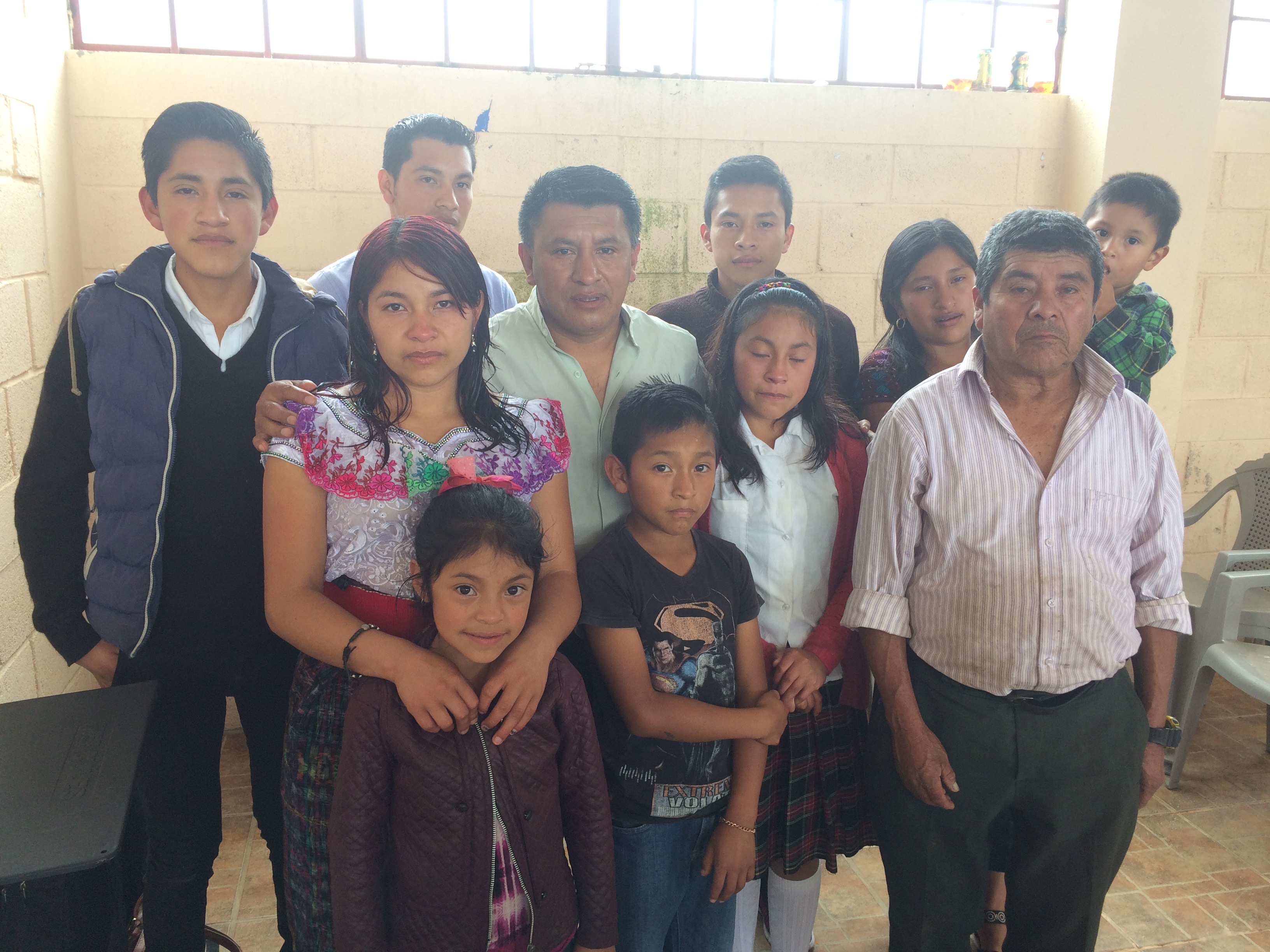

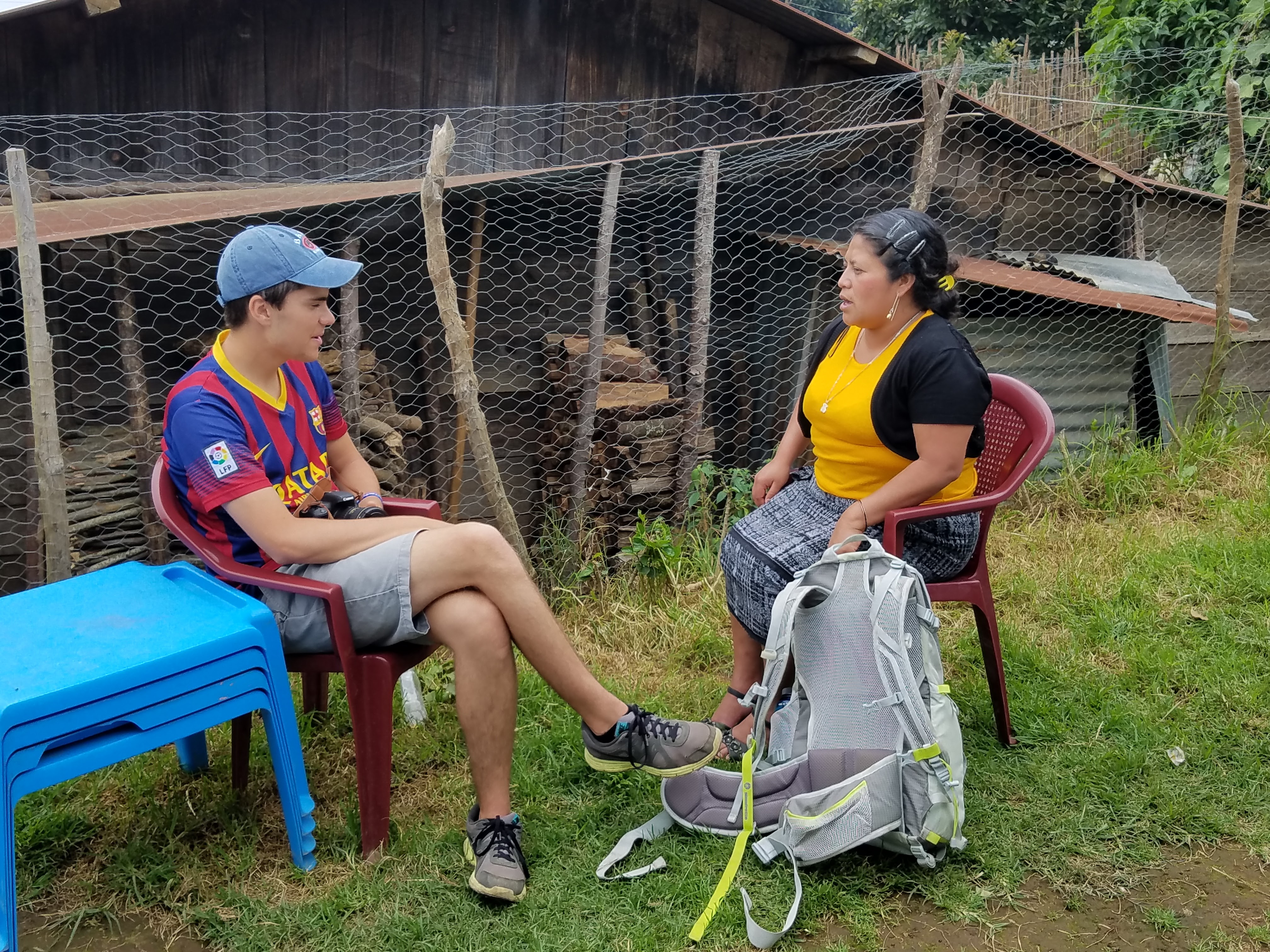
We were watching a video of Dominga, which my son had filmed two years ago. In the video Dominga is full of life, laughing, smiling and at times tearful as she describes challenges in her life. It’s hard to believe that this lively woman in the video died of a sudden brain hemorrhage only three months later. She was 40 and left behind a husband and nine children.

“I have fought all my life,” Dominga says in the video. “And God has helped me.”

After the film ended, people began to talk quietly. Dominga’s family—her nine children, husband and father–approached me with a USB stick in hand, hoping to get a copy of the video. They were full of thanks and appreciation.

“Before now, we only had a photo (of Dominga),” her son told me. “Now we have this video. Thank you so much. We are so grateful.”

I asked if I could take their picture and they stood huddled together in the corner of the classroom. I looked at the group and noticed Dominga’s father but no older woman who could be her mother. Later someone told me her mother had decided not to come. She was still mourning the loss of her daughter two years ago and thought it would be too difficult to view the film.

Dominga’s family never got to say goodbye. Her father told me what happened. One day Dominga suddenly fell to the floor. They realized it must have been a stroke but they thought she would survive. They drove her two hours to the closest hospital in Sololá and she was treated. She was in a coma for a few days but never came back. No one could believe it.

Showing the video of Dominga was probably the toughest thing we did in our trip to Guatemala last week. I knew it would be hard for the family. Yet the experience also helped me see that our relationship with the people in Panyebar is even closer than before. We’ve walked with them through trials and tribulations. And despite language barriers and cultural differences that can separate us, we share so much. We can be sad together over our lost sister but also happy as we see the smiles of the children playing and laughing in the preschool where she worked.

And life does go on. God is blessing Dominga’s children. Her oldest son, Hermoncindo, has finished his law degree, a huge accomplishment for a rural Guatemalan. He told me he is hoping to find a job with the government but it will be tough and costly to apply for. Dominga’s daughter Lucia, who had to take time off from school due to a back injury, and then filled in for her mother at the preschool for two years, is planning to return to the university in a few months. She hopes to get a degree that will allow her to direct a school someday.

In the video, Dominga talks about the fact that she never got a degree. Despite this, she says, she is happy. She loves her children and the many children at the preschool where she works.

In fact, only about half the children in the village attend school, let alone get a degree. In many cases, their parents discourage them. They would rather see their kids working and earning money than going to school. In other cases, parents want their children to attend school can’t afford to buy the necessary school supplies and uniforms.

Abel (left, with Miguel) is the young and dynamic head teacher at the middle school. He knows how to give a good speech and draw in an audience. After we showed the video, Abel talked to the students in the room about how Dominga and Juana (the other woman featured in the video–and Abel’s sister) were incredible examples of hard work and sacrifice for the community. They didn’t get degrees, but both of them overcame difficulties and hardships to serve their community.

“It is a privilege to be able to attend school,” Abel said, “You should always work hard and be grateful.”

After the movie, Juana told me that Dominga had been incredibly excited to be filmed.

“ ‘We’re going to be movie stars!’ she kept saying,” said Juana.

Juana also told me that Dominga scolded her for crying during her on-film interview.

“You shouldn’t cry!” she said.

But then when it was her turn, Dominga cried as well.

As I reflect more on the film, I feel thankful that Dominga and Juana were brave enough to share their lives in the film. It’s not always easy to be vulnerable. I’m also thankful to Miguel for his hard work editing, creating subtitles and selecting beautiful Guatemalan guitar music. I am proud of his work. (The photo at the end of this post shows him interviewing Juana two years ago.)

The day after we showed the film, we were invited to a service of “acción de gracias” (thanksgiving) for the middle school’s 15th anniversary. It was touching that the teachers had waited for our arrival to celebrate this milestone. First, they served our entire group of 23 a delicious lunch of chicken, rice and tortillas. Then, along with the middle schoolers and people from the community, we packed out a nearby church, where we listened to music and testimonies for the next three hours. Afterwards, students came around with “refacciones”: trays of sweet tea and biscuits.

Many more times over the week we were offered words and gifts of gratitude. It’s true that it’s no small matter that they have a quality middle school and preschool in their little town. At the same time, the enormous appreciation they express is a lesson for me not to take anything for granted. As so often happens on trips like these, they taught us more than we taught them.

Be vulnerable. Be grateful. Live a loving life. This is what I hope to remember from our week in Panyebar.

Postscript: If you’d like to help a child in Panyebar attend middle school and continue on in their education, we’d love to have your support! There are currently about 30-35 of us who give a monthly contribution of between $25 and $200 to the school through our 501(c)3, Mayan Partners. To contribute, visit the Mayan Partners web site www.mayanpartners.org and let me know so we can add you to our list of supporters. Thank you!