Return to Tiburon

Return to Tiburon


I’ve just spent the last 10 days in Tiburon, my hometown. Everyone else in my house was away, so I decided to get away myself and spend time with my parents. I had a wonderful time, getting to know my town again.

Our highlight each day was a walk next to the water. Tiburon is an old railroad town and after the railroad shut down in the ‘60s, the town tore up the tracks and put in walking paths. One path stretches from Blackie’s Pasture all along Tiburon Boulevard and Richardson Bay to downtown. Another path runs along the waterfront, with spectacular views of the city and the ferry boat docks off of Main Street. Most often, we chose this waterfront path.

There’s always a lot of action on the waterfront path. There are a mix of locals and tourists, with many languages being spoken. People bring dogs, picnics and fishing equipment. One day, we paused at Elephant Rock, a rock that literally looks like an elephant and is surrounded by a deck for fishing. A fisherman was struggling to reel in something big. With his pole bending to the water he reeled in a large shark, about 3 feet long. It was one of the leopard sharks that populate the local waters and for which the town is named. (Tiburon is Spanish for shark.)

Another time on the walking path we saw two young boys with fishing equipment. They were cutting up squid to use as bait. We asked what they expected to catch and they said sharks and sting rays, which they would release back to the water.

You see all ages on the path. My mom was especially impressed by the elderly people, some with walkers, tackling the path. She found it inspiring that people who are challenged in that way would attempt to walk. She herself is 82 but she’s quite agile still and loved that fact that I got her out and about.

One day we walked not only next to the waterfront, but down Main Street and up and down Corinthian Island. Corinthian Island feels a bit like the French Riviera, with houses hanging off the side of the steep streets. At the top of the hill that makes up the island there’s an enormous Italian-style villa, complete with columns, and a pair of benches to take in the view of San Francisco, Alcatraz and the Golden Gate Bridge.

Walking around town brings back so many memories. A few times we saw the little dinghies from the San Francisco Yacht Club junior sailing club plying the waters. My brother and I participated in junior sailing several summers, as did most kids growing up in Tiburon. I’ll never forget the swim test we had to take to prove we could survive in the bay. We had to tread water for 10 minutes in the freezing bay. These days I bet the kids are allowed to wear wetsuits. I’ll also never forget the handful of times my brother and I sailed to Angel Island. It felt like an adventure out of a story book. We might as well have been going to Treasure Island.

I also have memories of my own kids visiting their grandparents in Tiburon. One summer day I arrived in town with the kids and their new bikes. My parents and I spent a couple of hours teaching them how to ride a bike on the flat paths under the steady gaze of Blackie. (Blackie is a life-size statue honoring the old retired war horse who occupied the pasture next to Tiburon Boulevard for many years.) In no time at all, it seemed, the kids had mastered the bikes and rode down the path with ease.

At the current time, there is a lot of construction happening in downtown Tiburon. The Caprice restaurant next to Elephant Rock is being redone. Two other restaurants are under construction on Main Street. One will be headed by Michael Mina, the celebrity chef. The town is trying to cast itself as a destination dining spot. There are only about 10,000 people in Tiburon, not enough to keep the restaurants afloat without lots of tourist dollars.

The main restaurant people flock to now is Sam’s, with its famous deck and view of the docks and bay. Sam’s underwent a renovation a few years ago, adding heated benches and Mexican wool blankets to take the chill out of the foggy days. There frequently is a line to get into Sam’s.

If you go to Tiburon on a summer weekend, you’ll find that Main Street is closed to cars. The restaurants set up tables in the street and a band plays. It’s a festive time.

My favorite spot in town is Ark Row, just beyond Main Street. Ark Row consists of a group of former turn-of-the-century houseboats that have been turned into shops. There’s a wine tasting spot, a salon and a guitar store along the quaint stretch.

Sadly, the town’s only cinema closed during Covid and the owner won’t reopen. For my parents that is the loss of one of their favorite past times, seeing first-run movies at the local theater. I wonder what will become of the space. Maybe they’ll turn it into condos. The town really can’t support more retail as the current retail is already struggling.

There is another favorite spot we didn’t get to this visit. It is the open space area at the top of Mt. Tiburon. There is a trail that traverses the crest of the hills and provides a 365-degree panorama of the bay. To the left is Richmond and Berkeley, the Richmond bridge looking like a toy erecter set crossing the bay. Straight ahead is San Francisco and the new, sleek Bay Bridge. Off to the right is the Golden Gate Bridge and Sausalito. Behind is Mt. Tamalpais. The property was in danger of being sold to developers until recently. Then a community group stepped in to save the property for open space. The large tract, 110 acres, will now be preserved. We’ve come here dozens of times for picnic and kite flying. I’m so glad it will be saved.

So long Tiburon. I’ll be back soon, I’m sure!

How a liberal flip-flopped on MyPillow

How a liberal flip-flopped on MyPillow


It all started three Christmases ago, long before the Jan. 6 insurrection at the Capitol and long before the right-wing conspiracies that the election was stolen.

My husband bought us a set of MyPillows. He had heard an ad on his trusted apolitical news station while driving to work, and he became convinced that these were the best pillows in the world.

I had never heard of MyPillows. When I took out my new pillow from the Christmas gift bag I was a bit skeptical. It felt bumpy inside. It wasn’t filled with down feathers or anything solid. But it was soft and bouncy. What was inside of this thing? Had my husband fallen for a gimmick?

“You got MyPillows?” my dad said from across the room, with a laugh. “We just bought a set too!”

Wait. My parents knew about MyPillows?

It turned out they not only knew of the pillows, but the backstory that went with it. Mike Lindell, a Minnesota entrepreneur, had invented these pillows. After a slow start the pillows became hugely popular and turned Lindell into a wealthy man. In the process, he had turned his life around. He liked to talk about how God had worked a miracle in his life by taking away his appetite for drugs. He was now a committed Christian. Just Google Mike Lindell and MyPillow and you’ll find a number of documentaries and videos about his story.

That sounds like a nice story, I thought. I’m also a committed Christian and I believe in miracles too. I’ll give the MyPillow a whirl.

I slept on the MyPillow for two years. The inside is filled with small foam pieces. The pillow doesn’t lose its shape. I was a MyPillow convert. My husband liked his MyPillow too.

Then, a few years later, I learned some disturbing news—disturbing for a liberal like me who was planning to vote for Biden. I read that Mike Lindell was a big Trump supporter. He and Trump were pals. It was 2020, the election year, and I wasn’t sure I really could sleep on my MyPillow knowing that news. Still, I thought, it would be silly to throw out these pillows over a political difference. And I was still impressed by Lindell’s personal story and faith.

Then came January 6, 2021, the day of the insurrection. Like most Americans, I was shocked as I watched and read about the events of the day. How could this happen in our country? Had Trump incited the violence? Who else was involved? There were reports Lindell met with Trump in the days leading up to the rioting. The Washington Post even captured a photo of a note he was holding that mentioned martial law.

I rethought my use of MyPillow. This wasn’t a neutral object like a mixer. I put my head on this pillow each night as I slept. How could I sleep on this object that was connected to a man that may have supported the insurrection? I should burn this pillow. Or at least trash it.

But I didn’t burn or trash the pillow. It really was the most comfortable pillow I had slept on. I didn’t want to get rid of it. And Lindell’s story still pulled at me. I don’t hate Christians who follow Trump. I understand somewhat how they justify their support. I just don’t agree with them. And I certainly don’t agree with using violence. I’m sure most of them don’t agree with violent acts either. My dad, for instance, is a big Trump supporter, but he would never condone violence.

A couple of months later I did something unthinkable (at least to my liberal friends). In a flurry of Covid reorganizing, I decided to replace the old, squishy pillows in the house with MyPillows. I thought about it a lot and tried to pretend I didn’t know about Lindell’s controversial politics. Confessing my purchase to a friend I said, “I guess my personal comfort level is greater than my political loyalties.” I even got lured into buying a few other items on the site. I bought an American flag and mounting kit, fire starters for the fireplace, and pricey “Patriot” coffee.

In the meantime, Lindell was still insisting that Trump lost the election due to voter fraud. In response, several large stores stopped carrying MyPillows. Lindell told the press he was losing millions. Twitter banned him.

I waited weeks for the MyPillow order to arrive. From the looks of things, plenty of people were still buying MyPillows. Finally, my order arrived. I unwrapped the pillows and replaced our old sagging ones. I gave the coffee to my dad. He loved it so much he bought three more bags. In fact, my dad appreciated that I was giving business to a Trump ally. After four years of being at odds with one another politically, we could relate and chuckle a bit vis a vis Lindell’s products.

I’m eager to put out my American flag at our front stoop. It’s the first time since Obama that I would want to fly a flag. In fact, I’ve never flown a flag outside my house. But I’m truly excited that Biden is running the country and the Trump era–hopefully–is over, no matter how much Lindell and others keep touting him.

If you like my blog, please consider subscribing! Hit the subscribe button on the upper right corner of the main page. Thank you!

My brain on fire

My brain on fire


Bold! Courageous! Creative! Articulate! Passionate! Artistic! Energetic!

Those are just a few of the things I felt in hypomania the first few months of this year. But even that list seems too tame. I felt all of that and even more. I could do anything! I heard God talking to me constantly and saw miracles by the hour! I was on fire with ideas and actions! The fire burned brightly day and night. Even at night I would wake up remembering vivid dreams. Everything, every word, seemed to have importance.

To keep up with my flurry of ideas, I wrote notes constantly. My desk was filled with Post-it notes and notebooks. I couldn’t write fast enough. For a time I slept with a small tape recorder next to my bed to record my thoughts.

I took a writing class and I spoke frequently in class. (Usually I’m the shy one in the back.) I didn’t even know how I was coming up with such great ideas. As my psychiatrist explained to me, my hypomanic brain was working overtime, supplying just the right words and memories. I was happy that for once I had the boldness and articulation to contribute in class. Did people notice I was hypomanic? The people who knew me did; others probably thought I was a lively personality

Hypomania is not understood well. It is different than mania in that manic people are often psychotic and are in danger of hurting themselves or others. Hypomanic people simply have an elevated mood, talk quickly, etc. I was hypomanic from sometime at the end of 2020 through February 2021. I didn’t really return to my usual self until this month.

I was happy in hypomania, though there were moments when something would catch my attention and I would be wracked with tears. Once, I remember realizing that my parents were getting older and they wouldn’t be around forever. Normally, in my non-hypomanic state I wouldn’t dwell on that, but in hypomania I cried and cried and cried. My mom was with me and assured me that everyone went through this loss. I would be fine. Another time I broke down in tears because I thought I would die before I could do what God wanted of me; Vicky Brodt, who stayed with me for more than a month, assured me God loved me and wouldn’t let me die too early.

I was actually quite productive in hypomania, which is a little unusual. I managed to rearrange all my bookcases in a way that makes sense. I lost more than 10 pounds and bruised three toes trudging up and down the stairs with armfuls of books.

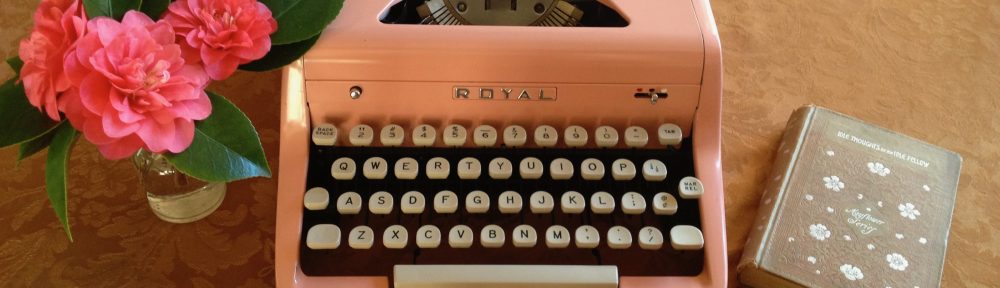
I also decided to make our guest room the “heritage room,” and I began collecting old family photos and heirloom items. I cleaned the embroidered comforter my grandma made for our wedding and put in on the bed. I gathered photos of my parents, grandparents and birthmother. I displayed my mom’s 1950-era pink typewriter and the photo of her as homecoming queen in Sioux Falls, South Dakota. Hypomania can be pretty fun.

For me hypomania was also a religious experience. As I mentioned before, I heard God talking to me throughout the day. This is a common trait of hypomanic people and some are quick to dismiss this as just imaginative thinking. However, I believe I really did hear God and he really was close to me. I didn’t always distinguish well what he was saying vs. what my own thoughts were saying. Nonetheless, he taught me a few things that I’ll never forget. One of those things is how to talk to people about God in a natural way. At one point we had a string of repairmen come to the house to fix things and I talked to each one about God. I gave them each my business card, and sometimes my Dad’s books, in case they wanted to learn more. I was not just on fire; I was on fire for God. He laid out to me plans I was to make in my life to be a better testimony to him. God also confirmed my calling as a writer and gave me ideas for books that would take me a lifetime to produce,

If left untreated, my fire would have burned up and left me in an ash-heap of depression. That’s what happened in my first bipolar episode. Back in 2011, I had refused drugs and after six months of burning hypomania I felt into a deep depression. It all happened so quickly, as if a switch was pushed. I didn’t want to experience that again, so this time I accepted the drugs. They were effective. Within a few weeks of taking them I was well on the way to my old self.

Not surprisingly, some of my family members suffered quite a bit during my episode. They had to live through all the stages of my bipolar episode: depression, severe anxiety and hypomania. For them, this was a traumatic event that created pain. If they told this story it would be very different. They were worried about me constantly. Was I spending too much time on Facebook meeting strange people; was I taking my meds? The answer was, yes, I was spending too much time on Facebook and yes, once I skipped my meds just to see what would happen. (Nothing bad happened.)

As for me, I feel entirely myself again and, truth be told, I miss hypomania. I don’t have a flurry of ideas and I can’t express myself so eloquently. I even had trouble writing this entry. I worry that I will become an ash-heap, unable to create.

Last week I explained my worries to the bipolar support group I joined. Many of them could relate. The facilitator, though, told me something important: “To be outrageous in your art you have to have your feet firmly planted on the ground.” By this, he meant that most bipolar people can’t follow through on their creative plans while they are hypomanic. The fire must be put out and you must stand calm and collected to create art–be it a poem, painting or novel. Perhaps I have enough fire in my normal state to create the art I want to create. That’s my hope.

**

Some of the photos I’ve used for this entry were taken at Las Fallas, a festival that takes place every March in Valencia, Spain. During the year various groups in the community construct large paper sculptures.

Then in mid-March, the figures are placed in the streets for people to view. The last day of Las Fallas, the people parade in the street, ending at a replica of Mary where they lay flowers at her feet. Then that night, after they’ve eaten paella cooked in the street, they burn the sculptures. I’ve read that the burning symbolizes burning of sins.

It strikes me that Las Fallas comes during Lent, also a time when we reflect upon our sins. Perhaps God is burning away my flaws so I can more freely create, love and “be outrageous.” Maybe those things He told me during hypomania will actually come to fruition.

What I do know is that miracles are still coming. They may be small, but my eye has been trained to look for them and they are abundant. More on that in a later post.

NOTE: Thanks for reading! I would love it if you hit the subscribe button on this post. I’m writing a book and if I have more subscribers I will have an easier time finding a publisher. You will get an email from me each time I publish a blog (not too often!) and you don’t need to read it.


In defense of Biden and why Trump was a poor leader, from hydroxychloroquine to Thomas Jefferson

In defense of Biden and why Trump was a poor leader, from hydroxychloroquine to Thomas Jefferson


Happy President’s Day! Here’s some interesting trivia. Which president since Truman had the lowest approval rating? Trump? No. Not surprisingly it was Nixon with 24%. Next was Harry Truman with just 32%. Why? Because he used the atomic bomb, which was controversial, and he sent troops to Korea. George W. Bush got 34%. Carter, the most moral president we’ve had, got 34%, not surprisingly due to the hostage crisis. Who had the highest? Obama? Clinton? No. It was Dwight D. Eisenhower, with 66%. Clinton tied him with 66%. To fill out the picture, Johnson got 49%, Ford 53%, Reagan 63%,, George H.W. Bush 56%, Obama 59%, and G.W. Bush 34%. To read more go to https://247wallst.com/special-report/2021/02/14/the-final-approval-rating-of-every-president-since-harry-truman-2/4/

So, what did Trump end up with? He ended with 34%. In a fascinating development, Trump’s approval rating has risen to 49%, as of Feb. 4. This was in the MIDDLE of his impeachment trial. (https://www.cnbc.com/2020/02/04/trump-approval-hits-new-high-in-gallup-poll-despite-impeachment.html)

My guess is that Trump supporters felt sorry for Trump and believed his lawyers who claimed that Trump did not directly encourage the insurrection, despite the abundant evidence from lawyers that he DID directly encourage the insurrection. If you happened to listen to the impeachment trial you would have heard new horrible tape of some of the violence that occurred that day. In my mind, there is no doubt that Trump directly encouraged this. Read on as I make my case.

In my humble opinion (that many of my relatives don’t agree with), I think Trump has been by FAR the worst president we have ever had. Maybe he’s a good marketer and he talks tough with China and he’s actually had a few good ideas, but I think anyone would agree he’s the most immoral president we’ve ever had. I don’t even have to list the reasons why because they are so well-known. One that stands out is the way he made fun of John McCain. He claims he’s had a Christian conversion, but he still insults people left and right and even did not seem to care when his vice president’s life was threatened.

It is a fact that Trump uses Nazi symbols and language to communicate with his white nationalists followers. My best friend Tamara has been a German history scholar for the last 20+ years and she is an expert in the Nazi era, even writing academic articles about this period of history. She has told me multiple times that Trump (or his followers), regularly send out “dog whistles” to white nationalists. Many people may not recognize these dog whistles and they are used very subtly.

(SoRRY FOR THIS FUNKY FONT! DON’T KNOW WhY It DID THIS!

 I trust my friend. She specializes in the Holocaust and many of Trumps moves are moves Hitler would approve of. Only, of course, Hitler went much further than Trump. For example, the disabled were the first to be gassed during the Holocaust. 275,000 disabled people were gassed by the end of the Holocaust. There is even a memorial to the disabled in Berlin, one of four Holocaust memorials in Berlin. Trump famously made fun of a disabled man during his campaign. My friend Tamara Wrote a paper about the subject of disabled victims in Germany IN a respected academic journal.

It may be a huge leap to say Trump is imitating Hitler, but maybe not. If you are a racist and dislike disabled people (I could prove that Trump is a racist and disliked disabled people but I want this post to be any longer than it is.), it is a short step to begin taking away their rights.

Now, I don’t believe Trump is so evil that God hates him. God loves everyone, including Trump. I think the problem is that Trump has such a large ego, and he will stop at nothing to get accolades. This has led him to seek support wherever he can get it—white nationalists, conspiracy theorists, regular Republicans, etc.

Sadly, Trump is a smart man and has some good ideas, but his ego leads him to make bad decisions. (I believe he’s an 8 on the Enneagram.) Some people can see this clearly but others are drawn to Trump because they believe he will “Make America Great Again.” The problem is, America is already great. We have the best democracy in the world. We do have many problems, but until Trump we were seen as one of the most racially just, generous to immigrants country, etc. America is great and I believe will always be great.

The other problem with Make America Great Again is that if this means going back to some golden era like perhaps the 1950s, our great company actually wrestled with many problems. Do we really want to go back to a time when “colored” folks had to use separate bathrooms, when gay people were forced to be closeted, and immigrants were treated even more poorly than now? Wouldn’t we rather live in today’s era when Blacks are gaining more equality (thanks BLM movement), LGBTQ people have more rights and immigrants are treated more fairly?

I like Biden because he will make America GREATER. He doesn’t have a huge ego, he’s actually humble as far as I can tell and he knows true suffering and is compassionate.(I believe he’s a 1 on the Enneagram. The “sins” of a 1 are moodiness, irrationality, anger. To read about his good points go to https://www.enneagraminstitute.com/type-1.

And as far as supporting Christians, Biden may be the most supportive of this endeavor as any other president. He is a sincere believer in God, goes to mass every Sunday and prays. He’s probably the most authentic Christian President we’ve had outside of Jimmy Carter and Abraham Lincoln.

Even the founding fathers practiced a kind of variation to true Christianity. For example, according to Wikipedia, “Jefferson was a Christian deist because he saw Christianity as the highest expression of natural religion and Jesus as an incomparably great moral teacher. He was not an orthodox Christian because he rejected, among other things, the doctrines that Jesus was the promised Messiah and the incarnate Son of God.”

As you know, Jefferson was our third president and the primary author of the Declaration of Independence. He has come under scrutiny in the last decade or so because he was a slave owner. He owned 600 slaves in his lifetime. Other slave owners included George Washington, James Madison, James Monroe, Andrew Jackson, Martin Van Buren, William Henry Harrison, John Tyler, James K. Polk, Zachary Taylor, Andrew Johnson, and Ulysses S. Grant.

In my opinion, Biden will SUPPORT churches, he just won’t do it by force. He won’t appoint a Betty DeVos as education secretary, a woman who I believe, was on the way to eventually REQUIRING prayer in school. I don’t believe public schools or private charter schools should force children to pray. Just look around and perhaps you or someone you know has been forced to practice a religion. In most cases this turns people away from religion. I’m not against studying the Bible in public school; after all it’s an historic document. I also think students should study Judaism, Buddhism, Hinduism and atheism. They should learn about all the major religions. ALL religions have some truth to them and are valuable.

Many people point to Biden’s son Hunter as proof he is a bad father. The truth is Hunter has admitted he had a drinking and cocaine problem. This is more than most addicts do. In my opinion addiction doesn’t happen out of the blue. Hunter had great trauma in his life. His mother and sister died when he was a toddler. Biden and another sibling were injured. Biden has tried to help Hunter. EVERY family has someone who struggles with addictions or mental issues. These people tend to make bad decisions and they hurt their family. Many are rejected by their families. Biden never cut ties with his son and in fact tried to get him help. As Hunter told reporters: “There’s addiction in every family. I was in that darkness. I was in that tunnel—it’s a never-ending tunnel. You don’t get rid of it. You figure out how to deal with it”.[90][91][101] He is set to release a memoir, titled Beautiful Things, sometime in 2021.[102] (https://en.wikipedia.org/wiki/Hunter_Biden)

I am so excited about Biden that I recently ordered a new flag to hang by our front door. After four years of being ashamed of being an American, now I am proud. I am proud of America and a patriot. Biden’s rating on Feb. 1 was 54%, which is good, but he’s facing high unpopularity with Trump supporters. I don’t know why. Biden is a MODERATE Democrat, and an honorable man who would never make fun of anyone.

Already Biden has accomplished a lot. Whereas Trump turned down Covid vaccines and even denied the vrius for many months, Biden has found a way to secure lots of vacciness and the rate of vaccinations is suddenly speeding up. You could argue that this would have happened anyway, so I realize the Biden might have just lucked out. However, it’s a fact that Biden never denied Covid and began to wear a mask early on and encourage things like social distancing. It took Trump so long to acknowledge Covid that one could argue (and I realize this is a stretch for many) that Trump’s policies and denial and withholding of vaccines and promotion of hydroxychloroquine (which has largely been debunked), actually led, in part, to the deaths of thousands of Americans. I know this is a stretch to believe but many of my liberal friends, even one friend who has a Phd in science, believes this. I’m not sure if it’s true but it’s certainly possible.

Biden is quickly working to achieve his agenda. According to a New York Times article, nearly two-thirds of Americans supported Biden’s decision to rejoin the Paris climate accord, 70 percent backed the United States’ re-entry into the World Health Organization and 83 percent said they supported his order prohibiting workplace discrimination on the basis of sexual orientation and gender identity, according to an ABC News/Ipsos poll released last week. (https://www.nytimes.com/2021/02/01/us/politics/biden-approval-rating-trump.html)

I am also heartened by today’s news that a bipartisan commission (a la the 911 commission) will be created to investigate the insurrection at the Capitol. I cried when I found out Trump was acquitted. But my hope is that this commission will find out what really happened during the riot and it will become abundantly clear that Trump encouraged the riot.

Many Republicans think a bunch of crazy people initiated the insurrection (including the Republican senators who acquitted him.) I believe Trump initiated it. The violence in Charlotte was simply a practice session to prepare for this riot. Trump’s pride could NOT ACCEPT that he lost the election. (By the way every court, including the Supreme Court, has found the election to be fair and fraud-free.)

Trump’s pride is his greatest fault. I believe he could be a good leader without his pride. I believe Trump is an 8 on the Enneagram. His greatest sins are secretivism and fear, lustfulness, and desire to control. To confirm this and see Trump’s strengths go to https://www.enneagraminstitute.com/type-8.

The truth is, everyone has flaws. I am a 5 on the Enneagram and my sin is that I am greedy. Although I appear generous and often am, basically I’m selfish. My ideal situation is to be alone in my room reading or writing. I prefer this over socializing, even with my family. The good news is we can all recognize our sins and change. We may also change Enneagram numbers. I believe I’m moving toward an 8, the same number as Trump! Ha ha! For those interested, Peter, my husband, is clearly a 2.

But who is to say that my sin is better than Trump’s? The difference is that 1) I am a true believer in Jesus and try to live in his footsteps and 2) I do not have a position of power. Perhaps if I had a powerful position, I would also develop pride and I would make bad decisions that would endanger people. Everyone is a sinner in need of God’s forgiveness. Even Billy Graham said this. Mother Teresa struggled with deep depression her whole life. Everyone needs forgiveness. Maybe that is Trump’s greatest lesson for us.

In my next blog, I will discuss Trump’s involvement with the Black community and my ideas on how to heal our inner cities.

Finally, I would really appreciate it if you would SUBSCRIBE to my blog! You will only receive, on average, 1 e-mail a week from me announcing my blog and you don’t have to read it. It would really help me because I’m writing a few books and if I have more subscribers I will more easily be able to find an agent and publisher for my books. THANK YOU VERY MUCH!

Also, feel free to leave a comment on my blog and I will get back to you as soon as possible. I love comments!

If some of my links did not come through, let me know and I’ll send you the correct link.

Thank you for reading. I realize we all have lots to read and our time is precious!
The year I became a Meetup junkie

The year I became a Meetup junkie


I was standing on a bluff overlooking the placid blue waters of the Pacific Ocean, my body stiff with fear.

“Grip your hands around the rope and let your feet guide you down,” called out our group leader Tom at the bottom of the bluff.

Tom was a self-styled Indiana Jones type, wearing a straw fedora and a vest made for safaris. His backpack was stuffed with packets of trail mix and small plastic bottles of wine.

I waited until the whole group had rappelled down the small cliff and then took my turn, gingerly lowering myself one step at a time and trying to forget my fear of heights. At least I’ll have a great story to tell my kids, I thought.

“You don’t want to miss our picnic on the beach,” Tom encouraged me. “Or the awesome Alamere waterfalls!”

I wondered how I had ended up on this outing when my idea of hiking involved paved paths close to home. I could have taken a stroll around the neighborhood while my kids slept in and my husband watched Saturday morning golf. Instead, here I was, attending another Meetup group.

As a stay-at-home mom for a decade, my days had been filled with “adventures” on a smaller scale—pitching endless games of wifflle balls to my boys in the backyard or creating giant drawings on pieces of taped-together printer paper. I treasured those nurturing times. On the one hand I never wanted those days to end, but on the other I sometimes felt stifled and isolated. I couldn’t only depend on my husband for adult interaction at the end of the day. I needed more. Now that my kids were a little older I had the freedom to explore new possibilities.

I joined Tom’s Wine and Adventure hiking group, as well as a Spanish language group, biking group and creative writing group. I became a Meetup junkie, squeezing in 20-mile bike rides and two-hour Spanish conversation sessions before picking up the kids from school.

In fact, my health demanded these changes. At age 43 I had fallen into a depression, the aftermath of a manic episode that had lasted most of the previous summer. I knew that healing for me would come from pushing myself to try new things and meet new people. Although initially–when the depression first hit–I couldn’t muster the energy to do anything beyond simple grocery shopping and keeping up with the laundry, six months later, the fog began to lift and I wanted to embrace my health. I dipped into novels again, wrote in my journal, and slowly filled my days with more adventurous physical activities.

“You need to get the endorphins going,” my therapist told me each time I saw him. “Try to sweat a little.”

He was right. Not only did I enjoy a good endorphin rush but often an adrenaline rush as well.

One typical Saturday morning, I left the house to go sailing with a woman I had met at my biking group. She was learning to sail with her husband. I had sailed as a kid and recently taken some lessons so I thought it would be fun.

The day looked promising as the sun sparkled off the water and colorful boats packed the bay. However, my friend and her husband bickered the moment we left the dock.

“We need the motor to get out of the harbor,” my friend insisted to her husband.

“That’s not necessary. There’s plenty of wind ahead,” he said, a cigarette dangling from his lips as he adjusted the sails.

A little later, still with no wind and the motor now purring, we entered the busiest part of the bay. All of a sudden a fast-moving catamaran ferry approached on the starboard side. If we didn’t change course we would collide.

“Cut the motor, cut the motor,” cried my friend, flapping her arms up and down.

We all let a string of expletives fly as my friend’s husband turned off the engine and the ferry raced by, its wake bouncing us up and down. He lit another cigarette.

I never got to know my new friends well (I didn’t sail with them again), but I did pick up that they were stressed from caring for their son, who was facing some health challenges. Probably sailing for them was as much of an escape as it was for me.

When I was just coming out of my depression I reconnected with my oldest childhood friend once a week early in the morning before work and childcare responsibilities absorbed us. She had, in the intervening years, also struggled with depression and understood me in a way most couldn’t.

“You are doing great getting out so much,” she would encourage me as I recounted my first forays sailing, hiking and biking as well as thinking about restarting a career.

She then told me about her dreams of moving to Portugal and her schemes to buy and renovate properties in rust-belt cities like Pittsburgh. I sensed she needed adventure just as I did to buoy her through the trenches of middle-aged life. Dreaming is underrated, we agreed, and for that moment I didn’t want to be anywhere else but sipping lattes at 7 am in the fanciest hotel lobby in town feeling like the sky was the limit.

For their part, my kids enjoyed seeing this new side of their mom. My older son gave me a drawing that still hangs on the bulletin board above my desk. In it he sketched a sailboat with me at the tiller, my long hair flying behind. “Comfy wetsuit,” he wrote next to me with an arrow pointing to my sleeker-than-life figure. “Mom wins race,” he wrote at the top.


Eventually, as I regained my equilibrium, I wondered if I needed so much stimulation. Would I slip back into depression if I didn’t keep up a fast pace? The many Meetups had gotten me out the door and energized me when I would rather have stayed in bed. But maybe they had served their purpose.

I took a part-time job that curtailed my excursions and kept me behind a desk. A few months in I realized I was doing just fine. I was happy with my life and several new emerging career paths. I returned to simple walks around the neighborhood and I was content to watch as my kids, now teens, left the house on Saturday mornings to go hiking, biking and sailing. Sometimes we compared notes on the best trails and where to catch the best views.

From time to time my younger son talks about refurbishing my childhood sailboat, which has been languishing in my parents’ backyard for 30 years. I hope my wetsuit still fits when he’s ready to launch.

What Grandma taught me about living a lockdown life

What Grandma taught me about living a lockdown life


In mid-March, after California Governor Gavin Newsom ordered shelter in place, my mom and I commiserated over the phone.

“It’s going to be tough to stay at home for a month,” she said, not knowing then that our stay-at-home orders would eventually stretch until June and then this month begin again, encompassing the entire holiday season.

“Yes,” I said, talking to my mom, but then a thought popped in my head. “Grandma would be just fine with this. We all need to be just like Grandma.”

My paternal grandma, who came of age during the Great Depression and become a devoted homemaker, loved to stay at home. In her mind, the depression had never really ended. She ran a tight and efficient ship, carefully planning meals, wasting nothing and enjoying simple family times.

In many ways, Grandma was probably like a lot of grandmas for those of us in my generation. We never really understood our grandmas and maybe even chafed under their rules. But these past months, I, for one, have thought often of my grandma, who passed away more than 10 years ago. I’ve come to see that her way of life contained lessons for our long slog through lockdown. They’ve served me well through the ups, downs and even a deep depression.

The Clean Plate Club

“Who is going to be a member of the clean plate club tonight?,” my grandma would announce during each meal.

Although I loved Grandma’s always-from-scratch meals–hearty pot roasts and thick meatloafs–I could never quite finish them. I usually moaned and looked to Grandpa to help me with a few bites.

At home during shelter in place, I didn’t enforce the clean plate club, or her advice to chew every bite 32 times for maximum digestion. It would be a bit extreme with my 20-year-old son. But in these rare days of sharing family dinners every night, I have relished the satisfaction of unhurried, home-cooked meals. Maybe Grandma had more on her mind than digestion and finishing our food when she slowed us all down at the table. What her “rules” did was give us more time together.

Family games

“Now let’s clear the table and we’ll get out the dice,” was Grandma’s usual after-dinner refrain.

Grandma always made time for after-dinner games. We too, like many others, have rediscovered the pleasures of old games during lockdown. Instead of retreating to our computers after dinner, my husband and I challenged each other to Rummikub, Spite and Malice and other games from our parents and grandparents. One night my husband teared up when he saw his belated mom’s handwriting on an old score pad. I soon cleared out a shelf in the kitchen so the games would be handy to reach. That took on new importance when I suffered a long period of depression this fall and could do little more than play games every night. We logged literally dozens and dozens of hours playing games. Somehow, sliding the colored Rummikub tiles around the table and studying the possibilities to create runs and pairs calmed my mind and anxieties.

A simple life

In so many ways, Grandma’s life was not much different than our quarantined ones. She loved cooking and cleaning, watching soap operas, and playing Bunco and Bridge. She rarely drove (only obtaining her license in her ‘50s), almost never went out to eat and never got on a plane. Grandma took pride in her clean house and hot meals and that was enough for her. Growing up, I never understood why Grandma kept her world small. Now I see that a life stripped down to essentials has a quiet pleasure of its own. In lockdown my house never looked cleaner or more organized;

Initially, I was energized to tackle creative projects and have longer conversations with family and friends. When depression set in last August, my creativity dried up and I thought it would be gone forever. I continued to make lists of things to do but they never got done. Thankfully, I emerged from that abyss with a lot of support. It strikes me that depression wasn’t really in Grandma’s vocabulary and she wouldn’t have understood it, but I bet she would have been right there with me helping in her own ways. She was tough but could also be tender.

Grandma’s iron rules around the house sometimes irritated Grandpa and they bickered. I can see why. After months of sheltering in place with my husband in the room next door, we have had our share of arguments. But I also remembered how Grandma maintained a tenderness toward Grandpa. After 50 years of marriage Grandma still laughed at his corny jokes and seemed impressed by his disappearing coin tricks. Maybe it’s a matter of perspective. When I get frustrated that my husband again forgets to turn down his Zoom call, I laugh and think of how lucky we were that we were financially stable during this perilous time.

Depression-era rules

I got to know my grandparents well because they came to visit us in the Bay Area for several weeks every year when my parents took an adult-only vacation. My brother and I struggled to meet their level of Depression-era frugality. We were lectured if we left the lights on in an empty room. We weren’t allowed to snack between meals. We might have resented the strict rules if we didn’t find some of them downright comical. My grandmother, for example, would ask us to carefully examine our paper napkins after each meal and save the gently used ones at our place for the next meal. Grandpa, meanwhile, assigned us each our own tiny ceramic dish where we could deposit gum we were tired of chewing but still had life in it. I wonder today, in our Covid-19 reality, what habits have I adopted that will follow me forever, even when they outlast their necessity?

Like our life today, Grandma’s was affected by circumstances out of her control.

She was 20 when the stock market crashed in 1929. At the time she was living with my grandpa’s family because her new stepmom had thrown her out of the house. Grandma and Grandpa were married in June 1931, three days after my Grandpa graduated from college, and at the height of the depression.

With financial constraints and limited opportunities for women, Grandma never had the chance to go to college. She would have made a great accountant. She kept meticulous records of her bank accounts well into her 90s and memorized every score of her beloved Chicago Cubs. Instead she became a housewife, a job she mastered as she raised two sons and moved around the Midwest while Grandpa managed commercial laundry businesses. Some years they lived in pretty single-family homes and others in cramped one-bedroom apartments above the laundry. She and Grandpa retired to a modest house in Arizona where she continued to do all her own cooking and cleaning. I realize now that I never heard Grandma complain about her position in life or the curve balls life had thrown her.

Different lives converging

I’ve had many more opportunities than Grandma. I’ve gotten two advanced degrees, held various jobs, traveled the world, and enjoyed concerts and dining out. I’m grateful for that. Now, however, I see that even the post-quarantine world will look much different. Travel is still a ways off. Dining at restaurants won’t return for a while. So instead, I tidy one more neglected drawer or find another creative way to use leftovers. Grandma would be proud.

As I set the table for one more family meal the other night, I remembered how Grandma would heat the plates before dinner, just as if we were in a fancy restaurant. It was one of her special touches. Yes, her world was small, but it was rich and generous too. In her mind, she lacked nothing. In my post-depression emergence, I realize that I also lack nothing. My joy has returned 10-fold.

With the Christmas season here I do wonder if Grandma, if alive now, would still be coping just fine. I can see her shaking her head about the politics, the suffering people. She’d be praying and reading her Bible. She’d miss going to church. But as long as we could have been together, she would have been happy. Her love of family trumped everything else. She was never happier than thinking about what to prepare for us next. Her love was pure, simple and unrestrained.

In her later years when she became a widow Grandma’s sons called her every night to check in. She was fortunate to live in her own house until the very end—she was 97—and cared for by two devoted Polish ladies. I miss Grandma. I wish, just for a night, she could sit at my table, eat my dinner, laugh at one of Grandpa’s old jokes and play a spirited game of dice.

Descent to madness, ascent to joy

Descent to madness, ascent to joy


How does one describe an experience of mental illness? It’s a question I’ve been asking myself a lot lately as I think about putting into words an odyssey I’d rather not dwell on too long. In the last four months I experienced a series of situations I wouldn’t wish on my greatest enemy (not even Trump). It was intolerable, full of suffering, and of course, as these things are, full of grace.
It’s hard to know where to start. I’d rather not divulge certain details. Suffice it to say several anxiety-producing situations (apart from even Covid) converged sometime in August that interfered with my sleep. When my sleep fell apart, I started to go down an abyss of no return. I remember my first night without a minute of sleep. I rotated between listening to a podcast, praying for everyone I knew and writing bits of poetry. But I felt anxious and scared all night. I was scared to go to sleep. I had already had an anxiety attack once and was fearful of another. I thought that perhaps the natural childbirth I had gone through (twice) was easier and preferable to this. At least that would have an end point.

I don’t want to recount the events linearly. Maybe someday. What I do want to remember and will never forget are the depths I was in. Because I still can’t believe I’m on the other side. Every day I wake up and I’m amazed I’ve come out of one of the worst experiences of my life. I’m safe, I’m loved, I’m whole and my worst fears never actually happened. This feels like a true, bonafide miracle.

At the worst point I was having anxiety attacks about every three days. My first attacks were “manageable.” I jogged around the house to get out energy. I did calligraphy to distract myself. I played board games with Peter for spurts of five or ten minutes. I polished silver. I chanted to myself over and over that I’d be OK. But the attacks got worse. The first ones lasted 15 minutes. Soon they were lasting an hour with no end in sight. I begged Peter for help. Fortunately, he had a prescription for anti-anxiety meds (which I had taken before) and although I felt bad taking a drug I hadn’t been prescribed for recently I took it anyway. In an hour I was better. I began to carry around the drugs just in case. But they took an hour to take effect.

During the attacks I became delusional. I thought I’d spin out of control and they’d have to take me to the hospital to a psych ward and I’d never see my family again. I’d be treated by paid staff who would be nice but clinical. I’d never get better. I became so convinced of this I couldn’t get out of the attack. I had other delusions but they are too scary to even write down.

We tried different things. One day I went golfing with Peter to get some fresh air. I was nervous the whole time that I’d see someone I knew and collapse. Or I’d have an attack on the course and I wouldn’t make it back to the car. I gave up driving for the better part of a month. I couldn’t go to the store. I desperately wrote a list of staples we needed so Peter could keep food stocked in the house and did most of my shopping via Instacart. My worst fear was being alone. I couldn’t take walks by myself for fear I would collapse. Now I know I was suffering from something called agoraphobia.

All this was sadly familiar to me. In spring 2011 I suffered a similar string of anxiety and agoraphobia when living in Spain. Peter was in the US when this started happening and when he arrived back he found me in the bathtub trying to relieve a searing pain in my side. It turned out the pain was an ovarian cyst (we never knew if it was related to the anxiety) and I had to spend a traumatic night in a local hospital. That sequence of events is perhaps for another time and place but it ended up sending me back to California to get well. It took me a full year to recover that time. After the anxiety was treated in May or so I spun into a manic episode for much of the summer of 2011. I tried to hide the episode or downplay it, being embarrassed that someone as rational as myself could slide into this. I saw few people and managed to conceal it from all but a few people. In the meantime, I was busy. I almost bought a house, almost bought an office building, wrote a book, had plans to start an olive-importing and chocolate-importing business and had many other grand ideas that were great but didn’t pan out. My doctor warned me that the longer I stayed in this manic place the longer I would eventually fall into a depression. I didn’t believe him. I refused to take drugs. I was having the best time of my life. Why would I want it to end? I had never felt closer to God or happier. But he was right. In October 2011 I slipped into depression and stayed there for a good six months.

After recovering from the events of 2011/2012 I never thought I’d go through anything like that again. My doctor didn’t even really know how to qualify me, as it is very rare for someone to experience their first manic/depressive episode at age 42. He called it the Allison de Laveaga syndrome. In any case, I was stable for eight years and took a light dose of mood-stabilizing drugs. I never understood why I had to go through that hell but I had a false sense that I had beat it and it would never come back again.

It turns out I learned a lot from that first episode. When events unfolded this time I was ready to admit what was happening to anyone and everyone. This time I was open to taking medication and talking to people. I asked for help. A real turning point came when I asked my friend Vicky to come over three days a week to spend time with me. That’s when the healing started. We played board games, did crafts, talked and cooked. I felt normal as long as I had a human with me. I needed medicine too and as soon as I started a regimen of anti-anxiety meds I never had another panic attack. The relief I felt was off the charts. For his part, Peter was an amazing nurse. He stayed with me during the mornings before Vicky arrived. He waited for me to fall asleep every night. He rubbed my back and watched Winnie the Pooh with me to help me fall asleep. For the most part, I couldn’t tolerate TV. It was too violent, to crass, too unpredictable. But Winnie the Pooh was perfect.

I was not in a dark night of the soul. I never lost faith in God, though I did question why so many people had to suffer and I was mad about that. I prayed a lot. I prayed with Peter. I prayed with my parents. I welcomed prayer and I have no doubt there was a spiritual component to my suffering. The evil one loves to see his treasured children suffer. In the midst of all this I was scheduled to lead a spiritual direction group. It took all my strength to lead a group of people in praying to God while I thought I’d fall apart at any minute. If anything, the group helped me more than I helped them. They were a kind and gentle group of close friends and they were tender and supportive as I honestly shared where I was at.

As so happens with these cycles, I’m now hypomanic, not quite fully manic but not far from it. It’s the best feeling in the world. If there was a drug to induce this it would be in high demand. I have endless creativity, exuberance and excitement for life, not much need for sleep, and an overall contentment. I’m carefully monitoring the situation with my doctor as I don’t want this to accelerate and then crash. But I’m also sad if he chooses to medicate me. After all I’ve been through I just want joy. But more than that I don’t want depression.

I know the work isn’t over. During my panic attacks I was reminded of certain long-standing phobias. I am sometimes afraid of going to the store. Maybe I will faint or maybe I will lose my wallet and embarrass myself. I am afraid of driving over highway overpasses. Even before this current episode started I was adjusting my driving to avoid steep hills and overpasses. I have a book called “Mastery of Your Anxiety and Panic.” My doctor recommended it. He recommended it in 2011 and I bought it but after things got better I gave it away. I didn’t think I needed it. So this time I bought it again and I know I have to face these things if I want to live a normal life. In addition to my psychiatrist I am working with a therapist to overcome these phobias.

One of the worst parts of this current episode was the concurrent depression. I lost interest in a lot of things and couldn’t write or read. I was especially upset about the writing and reading. But I just couldn’t concentrate. When people talked to me about slightly complex matters I just blanked out. I was scared I’d lose my keen mind and the reading and writing that I treasured. I could barely speak Spanish too, another favorite pastime, and I had to give up my weekly group. I could write a bit of poetry though and did continue with that. I could also address get-out-the-vote postcards and took some pleasure in that. I discovered I am terrible at jigsaw puzzles but I’m good at coloring.

As I told my spiritual director, my world has been widened through this experience. I understand more fully what it means to be human, to traverse the depths and heights. I also have a relationship with Peter, my sons and my parents that’s incredibly sweet and honest. To be fully loved is an incredible feeling. I cry more often now. I feel more deeply. I’ll never go back to being as rational and controlled as I was before. Many other truly incredible “coincidences” happened during this time. I’m just starting to unravel them. “For now we see through a glass, darkly; but then face to face: now I know in part; but then shall I know even as also I am known.”

Mini-review of The Samurai Garden

Mini-review of The Samurai Garden


Sometimes we experience a real resonance between our real life and the world of a book we’re reading. That has been the case as I’ve read The Samurai Garden, a 1994 book by a local (El Cerrito) author.

The main action of the book surrounds a young university student, Stephen, who has moved from Hong Kong to a small town in Japan to recover from tuberculosis. The book is written as a series of diary entries Stephen records for about a year, starting in 1937. World War II is beginning and the Japanese are invading China.

Stephen moves from busy, crowded Hong Kong to his grandfather’s beach house in Japan and is cared for by Matsu, an older man who has worked for the family for many years. Matsu’s touch is tender, as he cooks simple Japanese meals of fish and tofu and encourages Stephen to rest by painting, working in the garden, and swimming at the beach. As I read, I longed to be transported to that peaceful world too. I don’t have tuberculosis, thankfully, but I’m struggling with depression and anxiety and need much of the same medicine Stephen received.

The book has a wonderful parallel subplot. Matsu, it turns out, has been caring for years for a woman, Sachi, who has leprosy. Sachi lives in a mountain village with other lepers. She moved there years ago so she wouldn’t cause disgrace to her family. Matsu has been her lifeline over the years, helping her build her house and delivering food and supplies. Stephen begins accompanying Matsu on his trips to visit Sachi and is deeply impressed by her. She is still very beautiful, despite her scars from leprosy. It’s a beautiful example of how bonds can grow between people in unexpected ways. Part of Stephen’s recovery is made possible by his friendship with this woman, an outcast of society.

This is a very atmospheric book, with beautiful descriptions of Matsu’s garden and Sachi’s garden. Life and health come through the natural world. Stephen faces many trials (such as the dissolution of his parents’ marriage) but friendship and nature pull him through. This was a healing book for me.

Poetry, persimmons and my inner battle

Poetry, persimmons and my inner battle


Live human conversation is happening in my dining room. In this time of Covid it’s as soothing to me as listening to a symphony.

My son’s friend Emilio is visiting. He has come to build a tower desktop computer with my son TJ. The two of them have spread out the parts on the dining room table and are carefully assembling parts and screwing pieces together. They talk about their online school experience, attempts at working out and living at home.

Emilio says he hasn’t been out of the house since March. His mom has mandated that he sees no one. She hasn’t even allowed him to order his favorite fast food, for fear it might pass on the virus. I guess she relented today, knowing his computer is an important hobby.

I have a few errands to run, but I’m reluctant to leave this hum of conversation. I’ve been battling anxiety and my whole world is calibrated toward the goal of being less anxious. Even doing errands has become difficult. Can they just wait? Do I really need to return the wrong-size slippers I bought at CVS? Do I need to buy those noodles at Costco? Last time I went to Costco a loud alarm went off at the register and I was barely able to cope.

Writing, on the other hand, and this listening to human words, is a refuge. The physical act of putting words on paper or a screen is calming. It’s as automatic as driving a car, but even more immersive. To get lost in writing, to become absorbed with words and meanings and sounds, offers solace. How strongly I want to get lost! I want to escape my own troublesome thoughts.

Poetry has been perhaps the best escape for me lately. On several sleepless nights I’ve sat in bed with my notebook circling over a few lines of poetry, playing with different combinations of words and syllables. Poetry demands that every word, every morpheme, count. It’s writing at its most pared down and concise.

Some people think poetry is serious and stuffy and complicated. This is not true. A lot of poetry can be playful. Just look at a Billy Collins poem or many haikus. Many times a haiku will carry an ironic meaning. For example, the other day I wrote:

on the back fence
morning glories
open all day

I was trying to play with the idea that although these flowers have the word “morning,” their wide purple blooms are actually open all day. I have a view of them outside my kitchen window and all day long hummingbirds and butterflies flit around the flowers gathering nectar.

I also wrote:

deep orange persimmons
“let them ripen, be patient”
says my neighbor

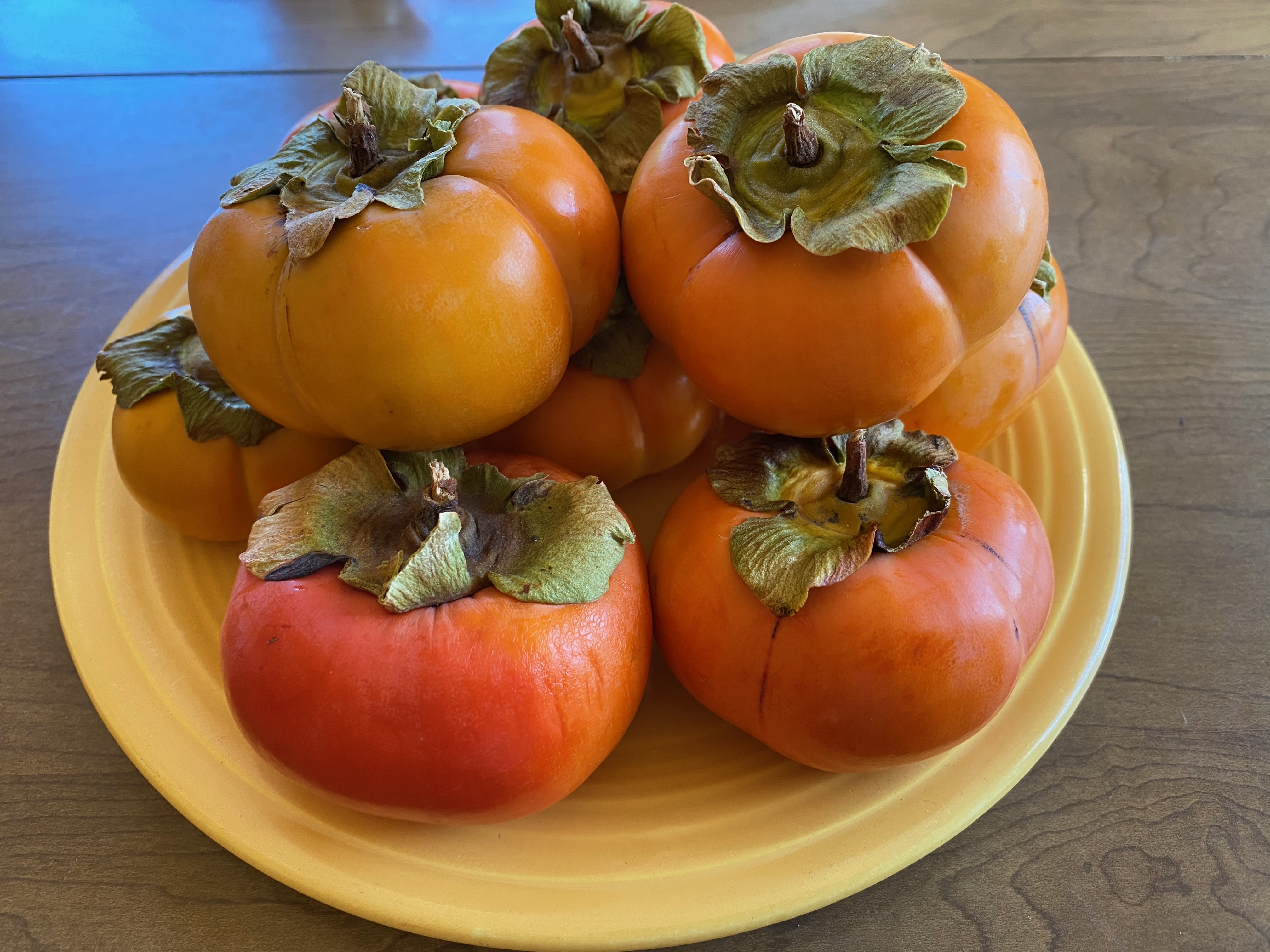
This captures a brief conversation with my neighbor the other day when I walked by her tree and she was picking persimmons. She gave me a few, still shiny and hard, and told me to let them ripen on the counter. They were like getting gold. According to my neighbor the squirrels often get to the persimmons before she can pick them.

Poetry is all about detail. It’s often about the senses. It’s about noticing and recording the noticings. For example, I might notice the feel of the jagged jigsaw puzzle pieces in my hand or the ooze of an egg I’m cooking as I crack it into the pan. All of those textures are fodder for poems.

I’ve learned that managing anxiety is also about details. One strategy is paying attention to breathing. I learned about breath prayer this summer when I participated in a virtual Camino pilgrimage. The guide I listened to instructed us to pick one phrase to say as we inhaled and another to say when we exhaled. I picked “Come Lord Jesus” on inhaling and “fill me with your love” on exhaling. I find it centering and relaxing.

***

It’s now a few days later and election night has come and gone. Biden has won and makes a wonderful speech, talking about unity and healing. For a short time I feel hopeful and elated. But still my anxiety, coupled with depression now–the sister of anxiety–continues. Writing has become difficult. I struggle to put words together. I fear that this one thing that helps me has been taken away. Still, I return to poetry, remembering a conversation with my son.

Miguel mentioned the other day that he had discovered William Carlos Williams, a poet from the last century. I am curious about this poet and do some Googling. It turns out he and Ezra Pound were part of the Imagism movement of the early 20th century, which featured “precision of images and clear, sharp language.” His poem about a wheelbarrow (below) has been frequently quoted. It is a brief, haiku-like poem, superficially about a wheelbarrow. Is there a deeper meaning?

XXII
from Spring and All (1923)
[1]

so much depends
upon

a red wheel
barrow

glazed with rain
water

beside the white
chickens

Technically, this poem features a lot of enjambment, which is incomplete syntax at the end of a line. You have to jump to the next line to finish the thought. The effect of enjambment is to slow the reader down, almost to a meditative level.

Some critics thought Williams wrote this poem when he was treating a dying patient (he was a doctor) and he looked out the window and saw this scene. The toy wheelbarrow belonged to the little girl he was treating. Williams scribbled these lines on his prescription pad. Later this theory was debunked, but I like the idea. I want to believe that a poet’s radar is always on, ready to compose poems, even when engaged in another activity. Maybe that’s why Mary Oliver recommended that poets always carry a notebook, to quickly write down their inspirations. I can picture Mary, walking at the Cape Cod seashore, with notebook in hand.

Here’s a haiku I quickly wrote this afternoon after a walk. It follows traditional haiku rules of five syllables in the first line, seven in the second and five in the third.

turtles on the log
brown shells absorb midday sun
walk around the lake

The 5-7-5 rule is often broken in published haiku. I like the rule, as it sets some parameters in writing. Next time I’ll try some enjambment. What are some of your favorite poems?

I received more persimmons the other day. They seem almost a fall poem in themselves, with their smooth orange skin. There are two types of persimmons, ones that have a round bottom and ones that have a pointy bottom. My neighbor gave me the pointy-end kind that need to ripen before you eat them. Then you scoop out the flesh and eat the soft, gooey insides. My friend gave me the round kind. You can slice these like an apple and eat them alone or in a salad. The texture is almost like a pear. I will savor these persimmons. In my state of struggle I need all the beauty I can find.

Covid chronicles: life with my 20-something son

Covid chronicles: life with my 20-something son


I knew something was up when I saw the meat mallet out on the counter.

“Did you use the meat mallet for something?” I ask my son.

“Oh yeah,” he says, with a smile, running into the other room to get something.

He returns with a smashed brown pulpy mass, about the size of a small lime but looking more like a putrified fig.

“What is this?” he says.

I examine the rough surface in my hand.

“It’s a Buckeye pod. You know, those huge things that hang from the tree in back? What were you doing with that?”

“Oh. I found some on the lawn. I wanted to see what was inside it.”

I’m glad. He’s still curious about the natural world. For all his time on the computer in Zoom classes and playing games, I wonder if he’s become immune to that.

And, I am reassured. TJ may be turning 20 today, but he hasn’t changed. He’s always loved taking things apart, whether it’s dissecting worms or old cellphones. Five years ago when my Ipad crashed, he delighted in hammering it apart and inspecting the innards. We gazed at the shiny chips in silence as if we were considering a sacred icon.

I’ve lost count of the times he’s disassembled his tower computer with the excuse he needs to add an additional fan or better graphics card. The first time he did this I panicked at the sight of all the parts and screws spread out across the dining room table. Now I know he is capable of putting it all back together about as fast as it takes me to do the weekly shopping.

I do a little Googling and I can’t wait to tell TJ that Buckeye seeds are poisonous. Buckeye trees like ours are native to California and, according to Wikipedia, native Americans used the poison to sedate fish to make them easier to catch. TJ and I don’t have a ton of topics to discuss, so I’ll jump at any juicy fact to get his attention.

***

It’s a few days later and TJ isn’t impressed by my knowledge about Buckeye seeds. He barely changes expression as I mention the word poisonous.

Instead we talk about air quality. He tells me his good friend can’t play tennis right now due to his lung condition and sensitivity to the bad air. Actually, no one should be playing tennis right now. It’s a shame, because tennis is TJ’s main exercise. I would have never imagined that in 2020, TJ’s sophomore year of college, he would be living at home and we would be in semi-lockdown due to a pandemic and further isolation due to bad air quality.

“Did you know Mom, that the hair in your nose is thicker than the hair on your head?” TJ says suddenly. “Your nose hair is very good at filtering particles.”

Later, I’m unable to confirm this information on the web, though it sounds perfectly plausible.

That evening I ask TJ, “Where did you get that nose fact? From Reddit?” I’m feeling proud I can drop the name Reddit into the conversation.

He laughs. “No, I heard that on a podcast.”

***

The kitchen is our common space. We meet there several times a day. Some days TJ rummages around the cupboards and fridge and creates his own meal, a fried egg and cheese sandwich or a veggie dog on a toasted bun. Other times, he asks if I can make his meal. I’m happy to oblige. He won’t be around forever. Someday the pandemic will end and he’ll move into an apartment of his own.

Today the smell of fresh bread fills the kitchen. I’m making bread in the bread machine. This bread will go well with the shakshouka (stewed tomato dish) we will have for lunch.

I’ve become obsessed with finding vegetarian dishes my son likes. My pandemic brain runs daily loops of possible menus: mushroom risotto on Monday, pesto tortellini on Tuesday, manchego mac ‘n cheese on Wednesday. I’m overjoyed when I talk to TJ’s brother on the phone and he tells me about a new recipe he’s found for spicy tofu tacos (“TJ will love it Mom!”). Meanwhile, trips to the grocery store always involve a stop at the veggie-based frozen food section. We’ve tried everything from Beyond burgers to “fishless” fillets.

TJ became a vegetarian his senior year of high school thanks to an attractive, smart girl in his class. That relationship stayed platonic, but TJ stuck with his new diet. He’s choosing this path not primarily for health or animal welfare reasons, but to reduce his carbon footprint. I respect that and now I eat very little meat too.

While I cook we talk about our cockatiel. For 12 years Fluffy was a constant presence while we were cooking or eating.

“I thought I heard him flying around the other day,” TJ says.

“I thought I heard him whistling,” I say.

There are still breath marks on the one kitchen window I can’t reach, little smudges Fluffy left behind while perching on the sill and observing the backyard.

I replay Fluffy’s last day with us back in June, finding him struggling to breathe at the bottom of his cage. His little body seemed crumpled like a tissue, his normally erect tail and wings flattened. Then I remember how TJ cupped him in his hands on the way to the vet. Fluffy had one final convulsion that caused him to flutter and crash onto the car floor. His tiny eyes, two black dots always so bright and alert, closed into tiny slits. Later we buried him in the garden outside TJ’s bedroom window.

We don’t talk about that sad day. But I know we are both thinking about it.

***

How did my son become an adult, no longer a teen? It’s the small stuff that hits me. It’s finding him ordering fancy Moleskine journals to take notes for his classes. I remember all the years when I had to buy his school supplies. It’s noticing the way he’s lined up his shoes neatly under his bed. I used to tidy his room. It’s seeing him pull on his vest to go skateboarding, timing his ride so he can watch the sunset. I used to nag him to go outside. As the saying goes, in parenting the days are long but the years are fast.

The other day I was driving to the store and when I reached the slight crest at our corner I saw a young man whizzing by on an electric skateboard. Wow, I thought, he’s going fast. Then I looked again and realized it was TJ. Since we both hardly leave the house these days, it felt strange seeing him out of context. I decided right then that for his birthday, I’d buy him a better helmet…and a Costco-sized wheel of manchego cheese.